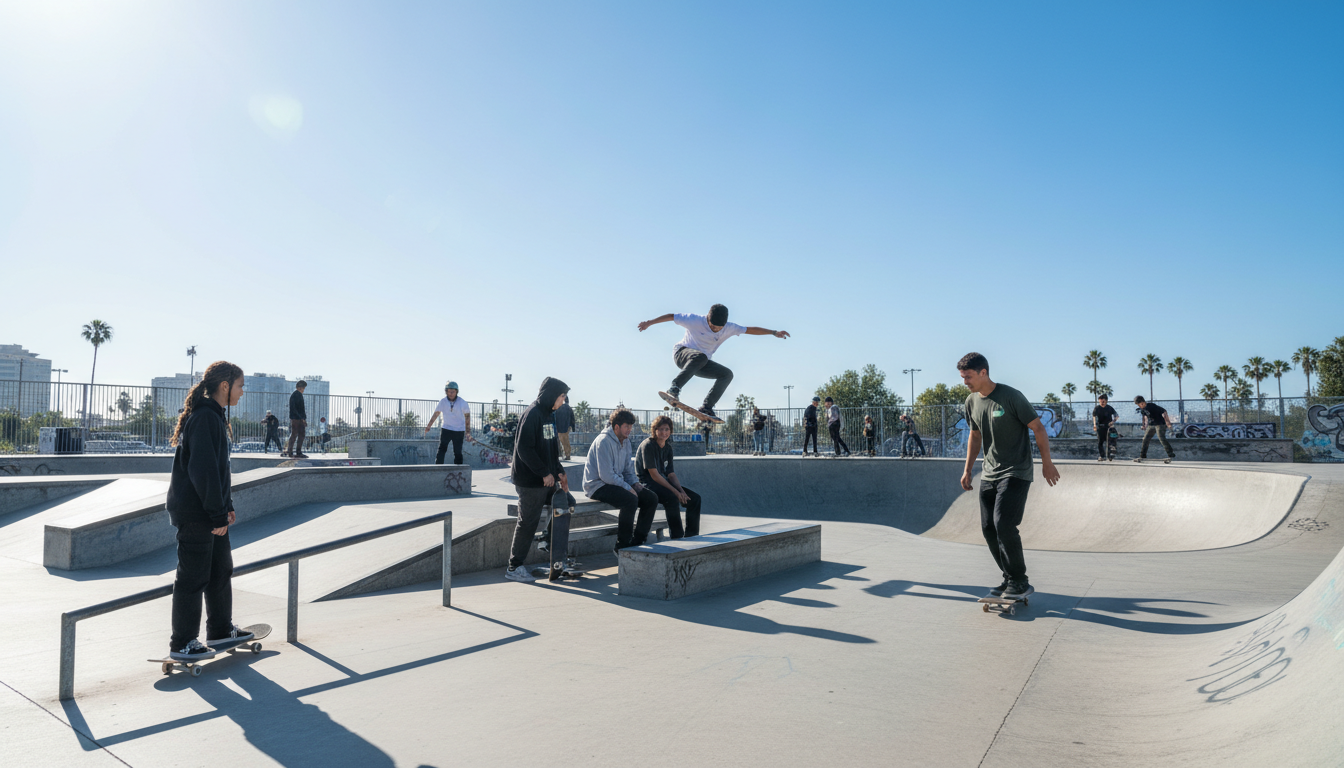
Understanding the unwritten rules of a skatepark is crucial for a harmonious and safe experience for all skaters. Skatepark etiquette revolves around respecting fellow riders and following basic guidelines to prevent accidents.
By being aware of the flow of the skatepark and respecting the order of turns, skaters can enjoy their time while minimizing conflicts. This not only ensures a smoother experience but also fosters a positive community where riders of all skill levels can thrive.
As we delve into the specifics of skatepark etiquette, we’ll explore the essential rules that every rider should know to become a valued member of the skateboarding community.
Understanding the Basics of Skatepark Culture
Skateparks are more than just facilities for skateboarding; they are vibrant cultural hubs. They foster a sense of community among skaters, providing a space where individuals can share their passion for the sport.
What Makes Skateparks Unique Social Spaces
Skateparks stand out as unique social spaces because they are largely self-regulated by the skaters themselves. This self-regulation fosters a culture of mutual respect and appreciation, where skaters cheer each other on and offer constructive feedback. For those new to a skatepark, it’s essential to acknowledge the local skaters who frequent the park and respect their knowledge of its dynamics. Visiting a skatepark like the one featured on Maddgear’s blog can provide insights into these unwritten rules.
The Importance of Unwritten Rules
The unwritten rules that govern behavior in skateparks are crucial for maintaining harmony. These rules vary between locations but are united by core values of respect and safety. Understanding these cultural aspects is key to integrating successfully into any skatepark. By respecting these norms, skaters can ensure a positive experience for themselves and others, contributing to a supportive community.
Essential Skateboard Park Etiquette for Beginners
As a beginner, understanding skatepark etiquette is crucial for a smooth and enjoyable experience. Skateparks have their own culture and unwritten rules that every rider should respect to ensure a safe and welcoming environment for all.
Observing Before Participating
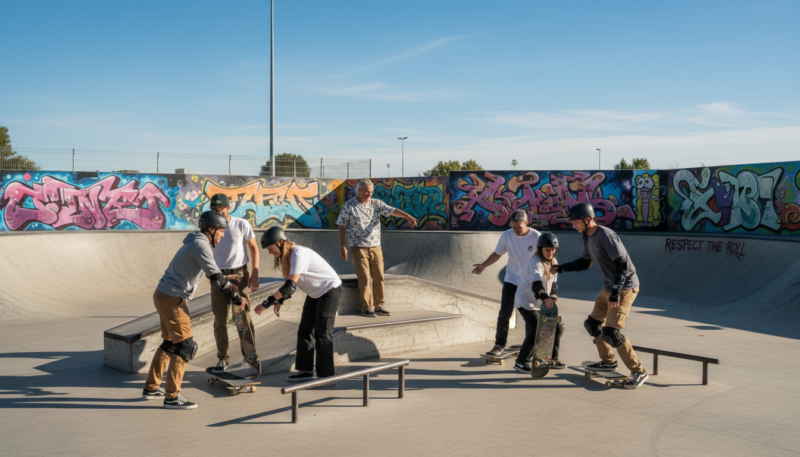
Before hitting the skatepark, beginners should spend some time observing how skaters interact with each other and the space. This observation period helps newcomers understand the park’s flow, identify potential hazards, and learn from more experienced skaters. By doing so, they can make sure they’re not disrupting others when they start skating.
Choosing the Right Time to Visit
The time of visit can significantly impact a beginner’s experience at the skatepark. Visiting during less crowded hours, such as early morning or weekdays, allows beginners to get familiar with the park’s features and basics without feeling overwhelmed or getting in the way of more experienced skaters. These quieter periods provide an ideal opportunity for newcomers to practice and build their skills.
Mastering Basic Skills Before Park Visits
Mastering the basics of skateboarding is essential before venturing into a skatepark. Beginners should practice fundamental skills such as balancing, pushing, and turning in a safe environment like a parking lot or driveway. By honing these skills, they can confidently navigate the skatepark and make the most of their time there, paving the way for a successful skating career.
Flow Rules: Navigating the Skatepark Safely
Effective skatepark etiquette begins with mastering the flow rules that dictate how skaters move through the space. Understanding these rules is crucial for a safe and enjoyable experience for all skaters at the skatepark.
Understanding Park Flow Patterns
Skateparks develop natural flow patterns that all riders must learn to recognize. These patterns are influenced by the park’s design, including the layout of ramps, bowls, and other features. To navigate the skatepark safely, skaters need to identify the intended direction of travel in different sections. This awareness helps prevent collisions and ensures a smooth flow of traffic.
- Observe how other skaters move through the park to understand the prevailing flow.
- Note how the design of the skatepark influences the direction and speed of skaters.
Taking Turns and Avoiding “Snaking”
Taking turns is an essential aspect of skatepark etiquette. “Snaking,” or cutting off other riders, is considered a serious breach of etiquette and can lead to accidents. To avoid snaking, skaters should wait their turn and be aware of their surroundings. When waiting for your turn, position yourself in a way that doesn’t disrupt the flow of other skaters.
Communicating Your Intentions to Other Riders
Clear communication is vital in a busy skatepark. Skaters should use verbal and non-verbal cues to signal their intentions to others. This can include calling out “dropping in” or using hand signals to indicate your next move. By communicating effectively, you can avoid collisions and maintain the flow of the skatepark.
Obstacle-Specific Etiquette
Familiarizing oneself with obstacle-specific etiquette is essential for skaters of all levels. Different features within a skatepark demand unique considerations to ensure a safe and enjoyable experience for everyone.
Bowl and Ramp Rules
When using bowls and ramps, it’s crucial to be aware of your surroundings and other skaters. Only one rider should use a bowl or ramp at a time to prevent collisions. Proper entry and exit protocols are also vital; skaters should yield to those already in the bowl or on the ramp. For more detailed guidelines on skatepark etiquette, you can refer to resources like skatepark etiquette guides.
Rails and Ledge Etiquette
Rails and ledges require specific etiquette, including considerations for waxing. Skaters should communicate their intentions to others when approaching these features. It’s also important to be mindful of the surface condition you’re leaving behind, as waxing can affect the experience of subsequent users.
Flat Ground Areas: Where to Practice Basics
Flat ground areas are designated spaces for practicing basic tricks without disrupting the flow of other skaters using more complex features. Skaters should avoid performing flat ground tricks in areas that might interfere with others, such as the bottom of bowls or ramps. By keeping these areas clear, skaters can ensure a smoother experience for everyone at the skatepark.
Safety and Respect: The Core of Skatepark Culture
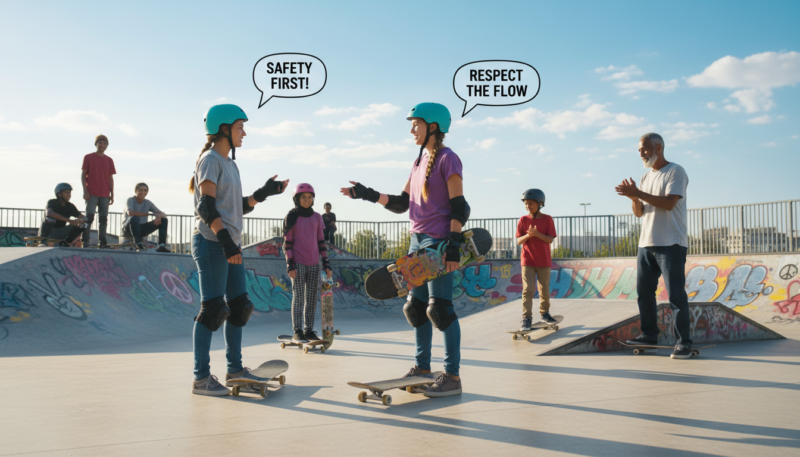
Safety and respect are the twin pillars that support the vibrant culture of skateparks. These elements are crucial for creating a positive and enjoyable environment for all skaters.
Handling Falls and Collisions Properly
When skaters fall, they should get up immediately if they’re not injured. Staying down can cause concern among other skaters and disrupt the session. Proper handling of falls and collisions is key to maintaining safety.
Board Control and Calling Out “Board!”
Losing control of one’s board can be hazardous. Skaters should always chase after their board and shout “board!” to alert others, much like yelling “four!” in golf. This warning helps prevent injuries to other skaters who may not be aware of the rogue board.
Respecting All Skill Levels
Respecting fellow skaters of all skill levels is vital for a harmonious skatepark environment. More experienced skaters should offer constructive feedback rather than criticism to less experienced ones, fostering a supportive community.
| Safety Tips | Description | Benefit |
|---|---|---|
| Handle falls properly | Get up immediately if uninjured | Reduces concern among other skaters |
| Control your board | Shout “board!” when it gets away | Prevents injuries to others |
| Respect all skaters | Offer constructive feedback | Fosters a supportive community |
Skatepark Etiquette for Parents and Spectators
As a parent or spectator, understanding skatepark etiquette is crucial for a positive experience for both you and the skaters. When visiting a skatepark, it’s not just about watching your kids or friends skate; it’s about being mindful of the environment and the people in it.
Where to Stand and Watch
One of the most important aspects of skatepark etiquette for spectators is knowing where to stand and watch. It’s recommended to keep to the outer edges of the park or designated viewing areas. Avoid standing in the middle of the skatepark or at the top of ramps and bowls, as this can be distracting and potentially dangerous for skaters.
How to Support Without Interfering
Parents can support their kids by cheering them on and offering encouragement, but it’s essential to avoid interfering with their skating or the flow of the park. Refrain from giving unsolicited advice or criticism, and let your kids learn from their own experiences.
Teaching Kids Proper Skatepark Behavior
Before heading to the skatepark, teach your kids the basic rules and etiquette. This includes taking turns, being aware of their surroundings, and respecting other skaters. By instilling these values, you’ll help your kids become respectful members of the skatepark community.
| Tips for Parents and Spectators | Benefits |
|---|---|
| Stand at the edges of the skatepark | Less distraction for skaters, safer environment |
| Support your kids without interfering | Encourages kids to learn from their experiences |
| Teach kids skatepark etiquette | Helps kids become respectful members of the skatepark community |
Conclusion: Becoming a Respected Member of the Skatepark Community
As skateboarders, embracing the culture of respect and awareness is crucial for a harmonious skatepark experience. By following proper skatepark etiquette, beginners can transform into respected community members, contributing to a positive and enjoyable environment for all skaters. This etiquette goes beyond rules, encompassing an attitude of respect and awareness that prioritizes collective enjoyment over individual preferences.
Experienced skaters play a vital role in mentoring newcomers, teaching them the unwritten rules that govern the skatepark. Continuous learning and adaptation to different skatepark environments are essential for a skateboarder to truly become part of the community. By being mindful of their surroundings and respecting the locals, skaters can ensure a positive experience for everyone at the skateparkpark>.
Ultimately, by making sure to respect the skatepark and its surroundings, skaters can preserve these spaces as positive community hubs.
FAQ
What are the basic rules to follow when visiting a skatepark?
When visiting a skatepark, it’s essential to observe the surroundings, wait for your turn, and be aware of other skaters. Mastering basic skills before visiting the skatepark is also crucial to avoid collisions and ensure a smooth flow.
How do I know when it’s my turn to skate a particular obstacle?
To determine when it’s your turn, observe the other skaters, wait for them to finish their run, and make eye contact or communicate with them. Avoid “snaking” or cutting in front of others, as this can disrupt the flow and cause collisions.
What should I do if I fall or collide with another skater?
If you fall or collide with another skater, check yourself and others for injuries, then move out of the way to allow others to continue skating. Be mindful of your surroundings and apologize if your actions caused the collision.
How can I support my child when they’re skating at the skatepark?
To support your child, stand in a safe location where you can observe them without interfering with other skaters. Encourage them to follow the rules and respect other skaters, and offer guidance on proper skatepark behavior.
What are some tips for beginners to improve their skills at the skatepark?
Beginners should start by observing others, practicing basic skills on flat ground, and gradually moving to more challenging obstacles. It’s also essential to be aware of their surroundings, take turns, and communicate with other skaters.
How can I avoid disrupting the flow at the skatepark?
To avoid disrupting the flow, be aware of your surroundings, wait for your turn, and communicate with other skaters. Avoid stopping in the middle of the skatepark or on obstacles, and try to maintain a consistent pace.
