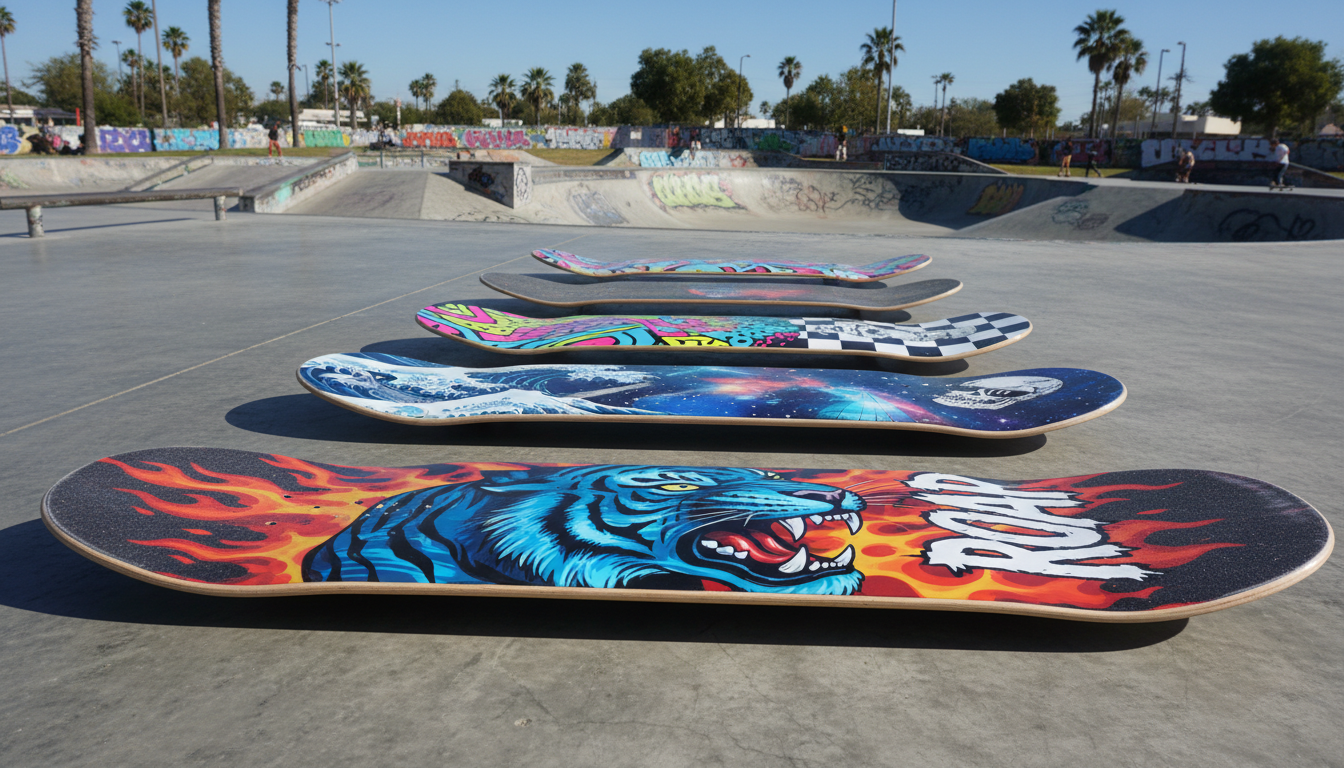
Selecting the right skateboard deck is crucial for optimal performance and comfort. The width and length of the deck impact everything from stability to the ability to perform tricks.
When choosing a new skateboard deck, factors such as height, shoe size, and preferred skating style should be considered. Modern decks come in various widths, ranging from 7 inches to over 10 inches, catering to different skating styles and purposes.
Understanding the basics of skateboard deck construction and matching dimensions to specific needs is essential. This comprehensive guide will walk you through the considerations for finding the perfect deck size.
Understanding Skateboard Deck Anatomy
Understanding the different parts of a skateboard deck is fundamental to improving your skating experience. The skateboard deck is a crucial component of a skateboard, and knowing its parts is vital for any skater.
Basic Components of a Skateboard Deck
The skateboard deck consists of several key components, including the nose, tail, and the flat middle section where riders place their feet. The skateboard deck is typically constructed from 7-9 plies of maple wood glued together to provide the perfect balance of strength, flexibility, and weight.
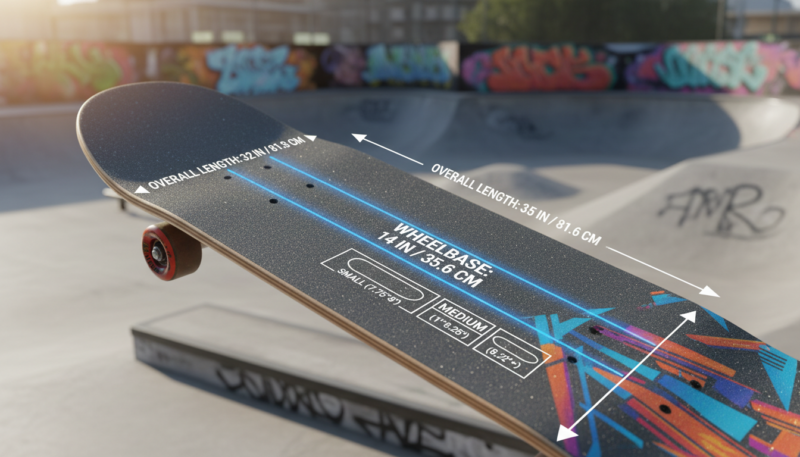
The nose and tail of a skateboard deck have an upward curve called “kick,” which enables riders to perform tricks. The wheelbase of a skateboard deck refers to the distance between the inner mounting holes of the trucks and affects how the board turns and maintains stability.
| Component | Description |
|---|---|
| Nose | The front end of the skateboard, opposite to the tail. |
| Tail | The back of the skateboard, opposite to the nose. |
| Wheelbase | The distance between the inner mounting holes of the trucks. |
Understanding these basic components helps riders make informed decisions about which deck features will best suit their individual skating needs and preferences.
Why Skateboard Deck Size Matters
Skateboard deck size plays a significant role in determining a rider’s balance, stability, and trick capabilities. The dimensions of the deck directly influence the overall riding experience, making it crucial to choose the right size for one’s height and skating style.
A longer wheelbase generally provides more stability, which is beneficial for transition skating where maintaining control at higher speeds is essential. On the other hand, a shorter wheelbase enhances maneuverability, making it ideal for street skateboards that require quick turns and precise control.
Impact on Balance and Stability
The size of the skateboard deck directly impacts the rider’s balance and stability. Wider decks offer more surface area for foot placement, resulting in greater stability at high speeds. This is particularly important for skaters who prioritize balance and stability in their riding style.
| Deck Width | Riding Style | Stability Level |
|---|---|---|
| Narrower (7-7.5 inches) | Street Skating | Lower |
| Medium (7.5-8 inches) | All-around Skating | Moderate |
| Wider (8-8.5 inches) | Transition Skating | Higher |
The table above illustrates how different deck widths correspond to various riding styles and stability levels. By choosing the appropriate deck size, skaters can enhance their balance, stability, and overall performance.
Determining the Ideal Deck Width Based on Height
Your height plays a significant role in determining the appropriate skateboard deck width. The right deck width can enhance your skating performance, while the wrong width can lead to difficulties in balance and control.
Height-to-Width Ratio Recommendations
To help skaters choose the right deck width, the following height-to-width ratio recommendations can serve as a guideline:
- For skaters 5’3″ and under, a deck width of 7.75″ or smaller is recommended.
- Skaters between 5’3″ and 5’8″ can opt for a deck width between 7.75″ and 8.0″.
- Those between 5’8″ and 6’0″ can choose a deck width between 8.0″ and 8.25″.
- Skaters over 6’0″ (183 cm and above) are advised to use a deck width of 8.25″ and above.
For more detailed guidance, you can refer to the skateboard buyer’s guide on CCS.
Common Width Measurements Explained
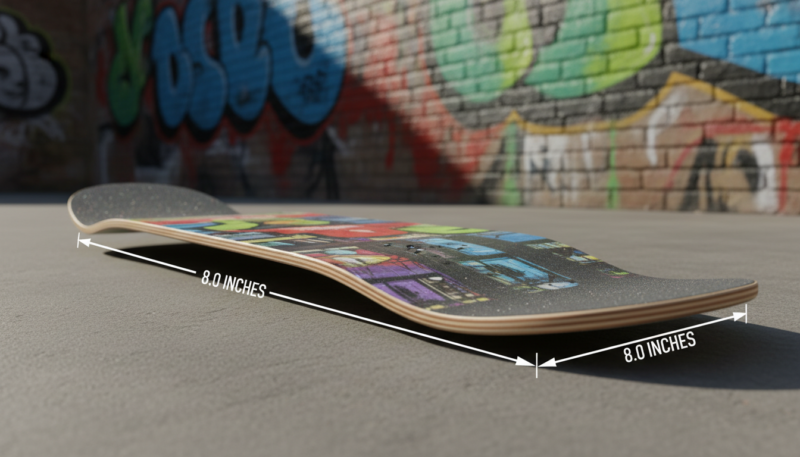
Standard skateboard deck widths range from 7.5″ to 10″, with each quarter-inch increment offering distinct performance characteristics. Taller skaters generally benefit from wider decks (8.25″ and above) to accommodate their longer stance and provide stability. Conversely, shorter skaters find better control with narrower decks (7.75″-8.0″) that match their stance width.
Special Considerations for Youth Skaters
Youth skaters require special consideration when it comes to deck width. Often, they start with narrower decks (7.0″-7.5″) that are proportional to their smaller feet and height. This helps in achieving better control and maneuverability.
Personal Preference and Skating Style
While the height-to-width ratio recommendations serve as a starting point, personal preference and skating style should ultimately guide your final decision. Experimenting with different deck widths can help you find the perfect fit for your skating needs.
How Shoe Size Influences Skateboard Deck Selection
Shoe size plays a crucial role in determining the ideal skateboard deck width for optimal performance. The right deck size ensures that the skater’s feet are positioned correctly, allowing for better control and maneuverability.
Optimal Foot Placement on the Deck
Optimal foot placement on a skateboard deck is critical for effective weight distribution, proper leverage for tricks, and maximum board control. Skaters need to ensure that their toes and heels just barely hang off the sides of the deck. If the feet hang off too much, the board feels wobbly and unstable. Conversely, if the feet are too small for the deck, it feels unwieldy and unresponsive.
For optimal performance, skaters with larger feet (US men’s size 9+) typically require wider decks (8.25″+) to provide adequate surface area for stable foot positioning. On the other hand, those with smaller feet (US men’s size 7 or smaller) generally perform better on narrower decks (7.0″-7.75″) that allow for better board feel and control.
Shoe Size to Deck Width Chart
The shoe size to deck width chart serves as a practical guide for skaters to find their ideal deck size. The recommendations are as follows:
- Shoe Size 7 or Smaller: Deck Width 7.0″ to 7.75″
- Shoe Size 7 to 8.5: Deck Width 7.75″ to 8.0″
- Shoe Size 8.5 to 9: Deck Width 8.0″ to 8.25″
- Shoe Size 9 and Larger: Deck Width 8.25″ and above
While this chart provides a useful guideline, testing different widths through trial and error remains the most effective way to find the perfect fit.
Matching Skateboard Deck Size to Your Riding Style

Your riding style plays a vital role in determining the ideal skateboard deck size for maximum performance and control. Different skating styles require different deck sizes to optimize the skater’s ability to perform specific tricks and maneuvers.
Narrower Decks for Technical Tricks
Street skating focuses on technical maneuvers like flip tricks and grinds, benefiting from narrower decks that are typically between 7.5 inches to 8.25 inches wide. These decks are lighter and more responsive, allowing for precise foot control and easier execution of technical tricks.
Medium-Width Decks for Versatility
Transition skaters who ride ramps, bowls, and parks typically prefer medium-width decks that balance stability with maneuverability. Decks in the range of 8.0 inches to 8.5 inches are common, providing versatile performance for various transition skating styles.
Wider Decks for Stability
Vert and bowl skating demand wider decks that provide maximum stability at high speeds and when landing aerial maneuvers from significant heights. Skaters in this category often prefer decks that are 8.5 inches or wider, as they offer the stability and control needed for complex tricks and high-speed riding.
The key to selecting the right skateboard deck size is understanding how your riding style influences your needs. Whether you’re into street skating, transition skating, or vert and bowl skating, choosing a deck size that complements your style will enhance your performance and overall skating experience.
Additional Deck Features to Consider
When selecting a skateboard deck, several key features beyond width play a crucial role in determining the overall riding experience. These features work together to enhance performance, control, and the rider’s ability to execute various tricks and maneuvers.
Deck Length and Wheelbase
The deck length and wheelbase are critical in defining a skateboard’s riding characteristics. A longer wheelbase, typically ranging from 14 to 15 inches or more, provides greater stability, making it ideal for transition and vert skating. In contrast, a shorter wheelbase, usually between 13 to 14 inches, offers enhanced maneuverability, suiting it for street skating. The choice between these configurations depends on the rider’s style and preferences.
Concave Depth and Shape
The concave depth and shape of a skateboard deck significantly influence its responsiveness and control. Concave refers to the inward curvature along the deck’s width, creating a “U” shape that affects trick execution. Decks come with varying concave depths, from mellow to steep, each serving different purposes. Mellow concaves are comfortable for cruising, while steep concaves provide maximum control for technical street tricks.
Nose and Tail Configurations
Nose and tail configurations vary between different deck shapes, impacting the skateboard’s overall performance. Popsicle decks feature symmetrical ends, making them versatile for various riding styles. Directional shapes, on the other hand, have distinct nose and tail designs optimized for specific skating disciplines. Understanding these configurations helps riders choose a deck that complements their riding style and preferences.
By considering these additional deck features, riders can fine-tune their skateboard setup for optimal performance in their preferred skating discipline.
Conclusion: Finding Your Perfect Skateboard Deck
Finding your ideal skateboard deck involves balancing multiple factors, including height, shoe size, and riding style. The right deck size and shape can significantly enhance your skateboarding experience.
To find your perfect deck, consider your skating style, whether it’s street, transition, or vert skating, and how it influences your deck preferences. Many professional skaters choose deck sizes that defy conventional recommendations, highlighting the importance of personal preference.
Experimenting with different deck sizes and shapes is crucial. Try borrowing friends’ boards or visiting local skate shops to test various decks before making a final decision. As you progress in skateboarding, your preferences may evolve, so remain open to adjusting your deck choice accordingly.
FAQ
What is the ideal skateboard width for street skating?
For street skating, a narrower width between 7.5 and 8.25 inches is often preferred as it allows for easier flip tricks and technical maneuvers.
How does shoe size affect the choice of skateboard width?
Shoe size plays a significant role in choosing the right skateboard width. A larger shoe size requires a wider deck to accommodate foot placement and comfort.
What is the difference between a shorter and longer wheelbase?
A shorter wheelbase provides more maneuverability, while a longer wheelbase offers more stability at high speeds. The choice depends on the rider’s style and preferences.
How does concave depth impact skateboarding performance?
Concave depth affects the ability to perform tricks and control the board. A deeper concave provides more grip, while a shallower concave allows for smoother foot movement.
What are the benefits of a wider skateboard for transition skating?
A wider skateboard provides more stability and control when skating in transition, such as in bowls or ramps, allowing for smoother and more confident riding.
Can I use the same skateboard for different riding styles?
While it’s possible to use the same skateboard for different styles, the ideal deck width and features may vary. For example, a deck suitable for street skating may not be ideal for transition or vert skating.
How do I determine the right skateboard width for my height?
To determine the ideal skateboard width, consider your height and shoe size. Refer to a height-to-width ratio chart or consult with a skateboarding expert to find the best fit.
