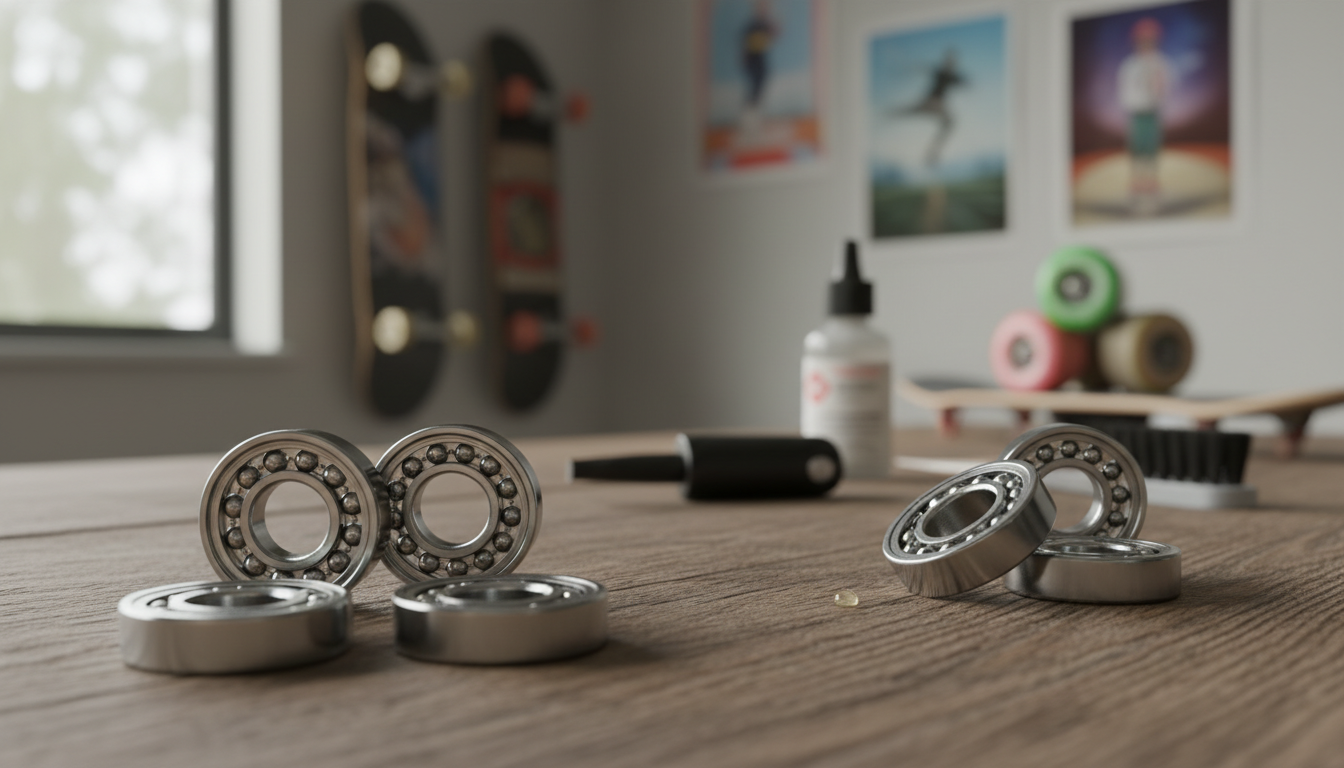
Skateboard bearings are crucial components that determine how smoothly and quickly wheels spin, directly impacting the overall skating experience. Every skateboard wheel is equipped with two bearings that fit standard axles, making size compatibility less of a concern.
When choosing bearings, factors such as material, quality, and maintenance come into play. Steel and ceramic are common materials used, each with its own set of benefits and drawbacks. Understanding these differences is key to making an informed decision.
This comprehensive guide will explore the essential aspects of skateboard bearings, including their construction, types, performance factors, and proper maintenance techniques to ensure optimal speed and durability.
Understanding Skateboard Bearings: Components and Function
Skateboard bearings play a pivotal role in determining the skateboard’s speed, durability, and overall ride quality. They are a crucial component that enables the wheels to rotate smoothly, thereby affecting the skateboard’s performance.
To delve deeper into the world of skateboard bearings, it’s essential to understand their anatomy. For a detailed diagram of skateboard bearing parts, you can find more information here.
Anatomy of Skateboard Bearings
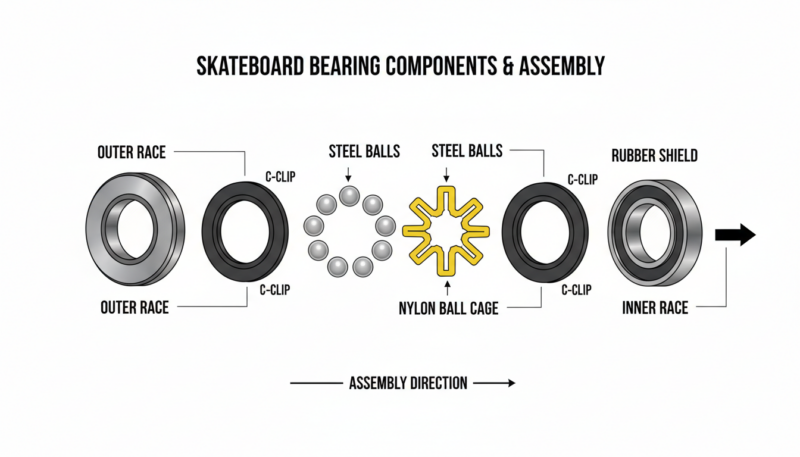
Skateboard bearings consist of several key components, including the outer and inner rings, balls, and shields. The quality and design of these components can significantly impact the bearing’s performance.
How Bearings Affect Skateboard Performance
The type and quality of bearings used in a skateboard can greatly affect its speed, durability, and overall performance. High-quality bearings with proper maintenance can provide a smoother ride and faster speeds.
Bearing Shields: Open vs. Closed Designs
Bearing shields come in two primary designs: closed (fully sealed) and open (exposed). Closed shield designs provide maximum protection against dirt, dust, and moisture, while open shield designs allow for less resistance and faster speeds.
The choice between open and closed shield designs depends on the skater’s environment, maintenance habits, and priorities regarding speed and durability. Some skaters prefer the slightly louder sound of open bearings, while others prioritize the protection offered by closed shields.
Choosing the Right Skateboard Bearings for Your Needs
Understanding your skateboarding needs is key to selecting the best bearings. Different skating styles and preferences require specific types of bearings to optimize performance and durability.
Steel vs. Ceramic Bearings: Pros and Cons
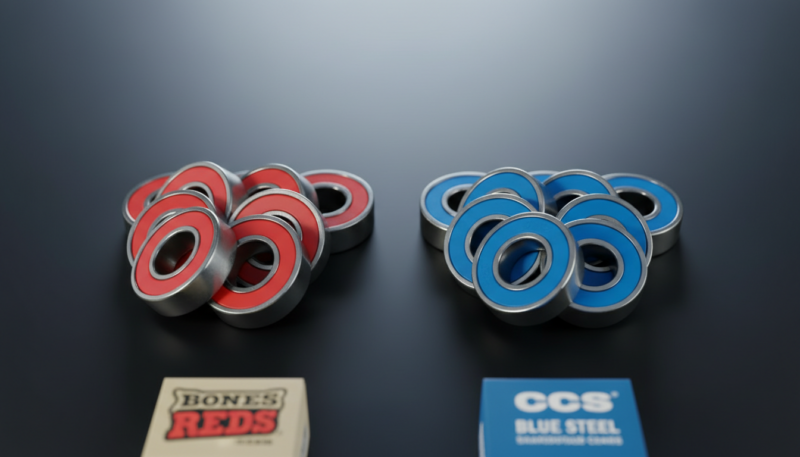
When it comes to skateboard bearings, the debate between steel and ceramic bearings is ongoing. Steel bearings, such as Bones Reds and CCS Blue Steel Bearings, are known for their durability and affordability. They are ideal for street skaters who prioritize impact resistance.
Ceramic bearings, on the other hand, offer less friction and are better suited for high-speed applications like downhill racing and longboarding. Bones Ceramic bearings are a popular choice among professionals for their smooth performance.
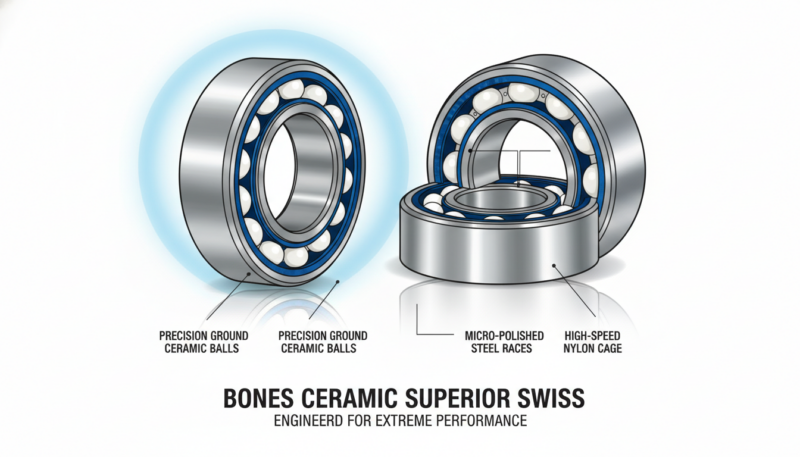
Understanding ABEC Ratings: Fact vs. Myth
The ABEC rating system measures the precision and tolerance of bearings. While higher ABEC ratings indicate smoother bearings, they don’t directly correlate with performance or durability. Skaters should understand that ABEC ratings are just one factor in choosing the right bearings.
Selecting Bearings Based on Skating Style
Different skating styles demand different bearing characteristics. Street skaters need durable bearings like Bones Reds, while downhill riders benefit from the reduced friction of ceramic bearings. Park and transition skaters require a balance between durability and smooth performance.
- Street skaters: Prioritize durability and impact resistance with steel bearings.
- Downhill and longboard riders: Opt for premium bearings with less friction, such as ceramic or high-end steel bearings.
- Park and transition skaters: Choose mid-range steel bearings with good shields for a balance of durability and performance.
- Beginners: Start with reliable, affordable options like Bones Reds or CCS Blue Steel bearings.
Maximizing Bearing Speed and Durability
The key to a smoother skateboarding experience lies in understanding how to maximize bearing speed and durability. To achieve this, skaters need to consider several factors, including the type of bearings they use, how they maintain them, and the components that can enhance or hinder their performance.
Bearing Spacers and Speed Rings: Do You Need Them?
Bearing spacers and speed rings are components that can significantly impact your skateboard’s performance. Spacers help maintain the correct distance between bearings, ensuring smooth wheel rotation. For more information on optimizing your skateboard bearings, you can visit our Skateboard Bearing Buying Guide.
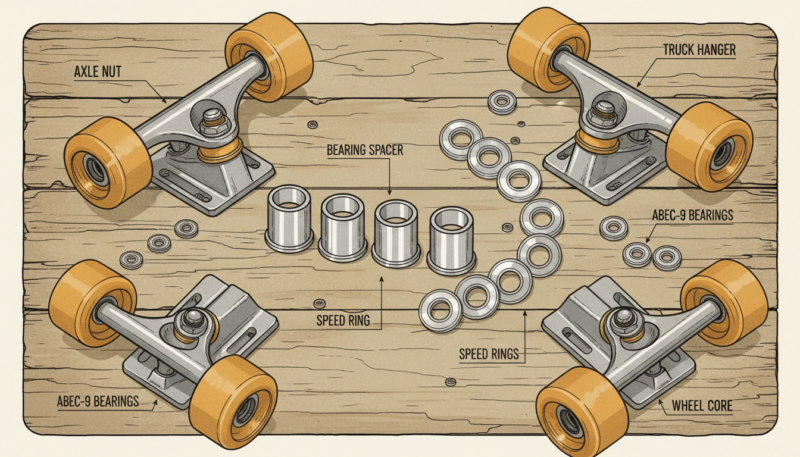
Preventing Bearing Damage and Wear
Preventing damage and wear to your skateboard bearings is crucial for maintaining their speed and durability. Regular cleaning and lubrication can significantly extend their lifespan. Using bearing shields, especially in dirty or wet conditions, can also help protect them from damage.
Popular Bearing Brands and Their Specialties
Several brands specialize in producing high-quality skateboard bearings that cater to different skating styles and preferences. Bones Bearings is renowned for its wide range of options, from budget-friendly Reds to premium Swiss ceramics. Other notable brands include Bronson Speed Co., Shake Junt, Minilogo, and CCS, each offering unique features and benefits. For instance, Bones Reds are an industry standard and our best-selling bearings, while CCS Bearings offer excellent value for money.
Conclusion: Maintaining Your Skateboard Bearings for Optimal Performance
Proper care and maintenance of skateboard bearings can significantly enhance your skating experience. Regular maintenance is essential for maximizing the lifespan and performance of your skateboard bearings. By cleaning and lubricating your bearings regularly, you can extend their useful life by months or even years.
A complete bearing cleaning involves several steps, including removing the bearings from your wheels, taking off the shields, soaking them in a cleaning solution like acetone or isopropyl alcohol, thoroughly drying them, and applying fresh lubricant before reassembling. The frequency of cleaning depends on your skating environment and style. For instance, street skaters in dusty areas may need to clean their bearings monthly, while indoor park skaters might only need to do so every few months.
Using the right lubricant is crucial. Skateboard-specific bearing oils or “speed cream” provide the optimal balance of viscosity and durability. It’s also important to monitor your bearings for signs of wear, such as noise, inconsistent spinning, or visible damage to the balls or races, which indicate it’s time for replacement. For more detailed information on selecting and maintaining skateboard bearings, you can visit our comprehensive guide on skateboard bearings.
Proper bearing maintenance not only improves performance but also represents significant cost savings over time. Well-maintained bearings can last through multiple sets of wheels, reducing the need for frequent replacements. Investing in quality bearings and proper maintenance tools pays dividends in the form of a smoother, more enjoyable skating experience.
FAQ
What is the difference between steel and ceramic skateboard bearings?
Steel bearings are more traditional and generally less expensive, while ceramic bearings offer improved durability and resistance to corrosion, making them a good choice for skaters who ride in wet conditions.
How do I know what ABEC rating is best for my skating style?
The ABEC rating measures the precision and tolerance of the bearing. Higher ABEC ratings indicate tighter tolerances, which can result in faster speeds. For casual skating, a lower ABEC rating may be sufficient, while more aggressive skaters may prefer higher ratings.
Can I use bearing spacers with any type of bearing?
Bearing spacers are designed to work with most standard bearings, but it’s essential to check compatibility before purchasing. Some bearings, like those with specific shield designs, may not be suitable for spacers.
How often should I clean my skateboard bearings?
The frequency of cleaning depends on riding conditions and frequency. As a general rule, bearings should be cleaned every few weeks or when showing signs of wear, such as rust or decreased speed.
What is the purpose of bearing shields, and are open or closed designs better?
Bearing shields protect the internal components from debris and moisture. Closed shields offer more protection, while open designs allow for easier cleaning and maintenance. The choice between open and closed shields depends on personal preference and skating conditions.
Are titanium or other exotic materials used in bearing construction?
Some high-end bearings feature titanium or other advanced materials, which can provide added strength, corrosion resistance, or reduced weight. However, these materials are typically more expensive and may not be necessary for most skaters.
How do I prevent my bearings from rusting?
To prevent rust, regularly clean and dry bearings, apply a rust-inhibiting lubricant, and store them in a dry environment. Ceramic bearings are also more resistant to corrosion than steel bearings.
