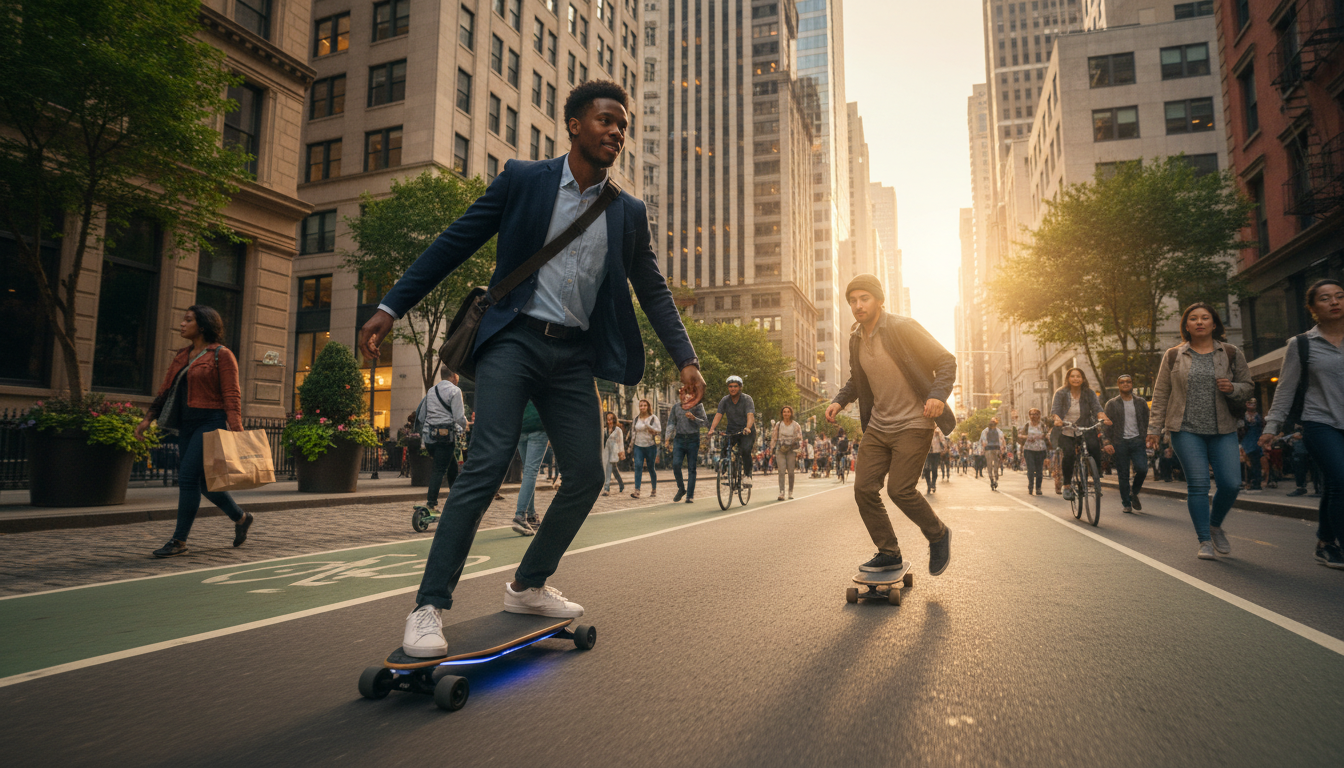
Urban commuters are increasingly turning to alternative modes of transportation, and skateboards have become a popular choice. The rise of electric skateboards has revolutionized urban mobility, offering faster commute times and reduced physical exertion.
When it comes to urban travel, the debate between electric skateboards and traditional manual boards continues. Both have their advantages and limitations, depending on the urban environment and conditions. This comparison aims to explore the key differences in technology, performance, and cost, helping commuters make informed decisions about which type of board best suits their needs.
By examining the practical applications and real-world performance of both electric and manual skateboards, readers will gain a deeper understanding of the benefits and drawbacks of each.
Understanding the Urban Commute Revolution
As cities continue to grow and evolve, the way people commute is undergoing a significant transformation. The urban commute revolution is characterized by a shift towards more efficient, sustainable, and flexible transportation options.
The Rise of Alternative Transportation in Cities
Cities are embracing alternative transportation methods to address growing congestion and environmental concerns. Electric skateboards have emerged as a popular choice among urban commuters, offering a convenient and compact way to navigate city streets. The rise of alternative transportation is driven by consumer demand for greater control over travel time and route selection.
How Electric and Manual Skateboards Fit into Modern Commuting
Both electric and manual skateboards are becoming integral to modern commuting patterns. Electric skateboards provide a motorized alternative that reduces travel time while maintaining maneuverability. Manual skateboards, on the other hand, offer a reliable, maintenance-free option for shorter commutes where physical exertion is desired. By combining skateboards with public transportation, commuters can efficiently cover the “last mile” of their journey.
The integration of skateboards into daily commutes reflects a broader shift in urban mobility culture, where consumers are seeking transportation options that offer greater control over their travel time and route. By adopting skateboards, commuters can enjoy a more efficient, flexible, and enjoyable urban commute experience.
What Makes Electric Skateboards Different
The distinct characteristics of electric skateboards set them apart from their manual counterparts in the urban commute landscape. Electric skateboards have become increasingly popular due to their unique blend of technology, convenience, and performance.
Core Technology Behind Electric Skateboards
Electric skateboards rely on advanced technology to provide a seamless riding experience. At their core, these boards are equipped with powerful motors, high-capacity batteries, and sophisticated control systems. The integration of these components enables riders to enjoy a smooth, efficient, and exhilarating ride.
The motors used in electric skateboards are designed to provide optimal power and performance. These motors are typically integrated into the wheels or connected through a belt drive system, each offering distinct advantages in terms of power delivery and efficiency.
Power Systems: Hub Motors vs. Belt Drives
Electric skateboards primarily employ two types of drive systems: hub motors and belt drives. Hub motors are integrated directly into the wheels, offering a cleaner aesthetic and reduced maintenance requirements. In contrast, belt drive systems transfer power from separate motors to the wheels, providing superior torque and acceleration.
| Feature | Hub Motors | Belt Drives |
|---|---|---|
| Aesthetic | Cleaner, fewer visible parts | More complex, visible belt |
| Maintenance | Lower maintenance needs | Higher maintenance due to more moving parts |
| Performance | Smooth, quiet operation | Superior torque and acceleration |
The choice between hub motors and belt drives depends on the rider’s preferences and needs. While hub motors offer the advantage of manual pushing when the battery is depleted, belt drives provide enhanced performance for hill climbing and aggressive riding. Recent advancements in hub motor technology have narrowed the performance gap with belt drives, making the decision increasingly based on rider preferences rather than clear technical advantages.
Key Benefits of Electric Skateboards for City Travel
The rise of electric skateboards has transformed the urban commuting landscape, providing riders with a fast, efficient, and enjoyable way to navigate city streets. These modern transportation devices offer several advantages that make them particularly suited for city travel.
Speed and Efficiency Advantages
Electric skateboards provide a significant speed advantage over manual skateboards, allowing commuters to cover longer distances in less time. With the ability to reach speeds of up to 25-30 mph, electric skateboards enable riders to keep pace with urban traffic, making them an efficient option for city travel.
Reduced Physical Exertion on Commutes
One of the key benefits of electric skateboards is the reduced physical exertion required during commutes. The electric motor assists in propulsion, allowing riders to conserve energy and arrive at their destinations feeling fresher. This is particularly beneficial for longer commutes or for individuals who may not be as physically fit.
Hill-Climbing Capabilities
Electric skateboards excel at climbing hills that would be challenging or impossible on manual boards. Premium models, such as the Backfire Zealot S2 and Ownboard Carbon Zeus Pro, demonstrate impressive hill-climbing abilities, with some capable of ascending grades of 15-25% with minimal reduction in speed.
- Electric skateboards can tackle steep hills with ease, thanks to their powerful motors and efficient battery systems.
- The torque provided by electric motors allows riders to maintain momentum on inclines without exhausting physical effort.
- Hill-climbing performance varies between models, with factors like motor power, battery voltage, and drive system design impacting climbing ability.
| Model | Hill-Climbing Ability | Battery Consumption |
|---|---|---|
| Backfire Zealot S2 | 14-15% grades | Moderate |
| Ownboard Carbon Zeus Pro | Uphill grade test in 23 seconds | High |
Traditional Skateboard Advantages in Urban Settings
For city dwellers, traditional skateboards present several key benefits. While electric skateboards have gained popularity, manual skateboards still offer unique advantages in urban environments.
Simplicity and Reliability
Traditional skateboards are known for their simplicity and reliability. Without electronic components, they are less prone to mechanical failures, making them a dependable choice for urban commuters. This simplicity also means there are fewer parts to maintain or replace, reducing the overall cost of ownership.
Weight and Portability Benefits
The weight of a skateboard is a crucial factor for urban commuters who often need to carry their boards on public transportation or store them in small spaces. Traditional skateboards typically weigh between 7-10 pounds, significantly lighter than electric models, which can weigh anywhere from 15 to 35 pounds due to their motors, batteries, and electronic components.
| Skateboard Type | Weight (pounds) |
|---|---|
| Traditional Skateboard | 7-10 |
| Meepo V5 Electric Skateboard | 17.6 |
| Backfire Zealot S2 Electric Skateboard | 23.3 |
| Onewheel GT Electric Skateboard | 35.6 |
The lighter weight of manual skateboards makes them easier to carry when navigating stairs, entering buildings, or using public transportation as part of a multimodal commute. Many traditional skateboards can be easily attached to backpacks or carried in specialized bags, offering superior portability compared to heavier electric models. For those interested in exploring electric options, visiting ridepropel.com can provide valuable insights.
Comparing Performance Metrics
When evaluating skateboards for urban travel, performance metrics play a crucial role in determining the best option. The choice between electric and manual skateboards hinges on several key factors, including speed capabilities, range and endurance, and braking systems.
Speed Capabilities: Electric vs. Manual
Electric skateboards generally offer higher top speeds and faster acceleration than manual skateboards. While manual skateboards rely on the rider’s physical effort to gain speed, electric skateboards are powered by motors, allowing for a more consistent and often faster pace. The speed of electric skateboards can vary significantly between models, with some high-performance boards reaching speeds of over 25 miles per hour.
Range and Endurance Factors
The range of an electric skateboard is determined by its battery capacity and the efficiency of its motor. Most modern electric skateboards offer a range suitable for urban commutes, typically between 10 to 20 miles on a single charge. Manual skateboards, on the other hand, do not have a limited range based on battery life, as they are powered by the rider. However, the endurance of the rider can be a limiting factor.
Braking Systems and Safety
Braking systems vary significantly between electric and manual skateboards. Electric skateboards feature electronic braking systems, including regenerative braking, which not only provides reliable stopping power but also recharges the battery. Models like the Onewheel GT and Pint can stop in as little as 14 feet. In contrast, manual skateboards rely on foot braking or sliding techniques, requiring considerable skill to execute safely at higher speeds.
The effectiveness of electric skateboard braking systems offers a significant safety advantage, particularly for less experienced riders navigating through urban traffic and pedestrians. The consistency and reliability of electronic braking systems make electric skateboards an attractive option for those prioritizing safety.
Top Electric Skateboards for Urban Commuters
Top electric skateboards for urban commuters offer a blend of speed, range, and versatility. These boards are designed to navigate the challenges of city travel, providing commuters with efficient and enjoyable transportation solutions.
Meepo V5: Best Budget-Friendly Option
The Meepo V5 is an excellent choice for urban commuters on a budget. It offers a powerful motor, long battery life, and a durable construction, making it ideal for daily commutes.

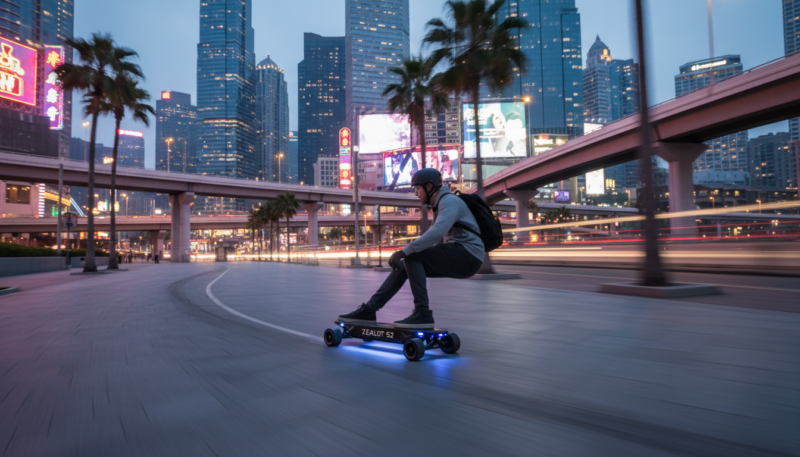
Backfire Zealot S2: Best Overall Electric Skateboard
The Backfire Zealot S2 stands out for its exceptional performance and features. With its high-speed motor and advanced battery management system, it’s perfect for commuters who need reliability and speed.
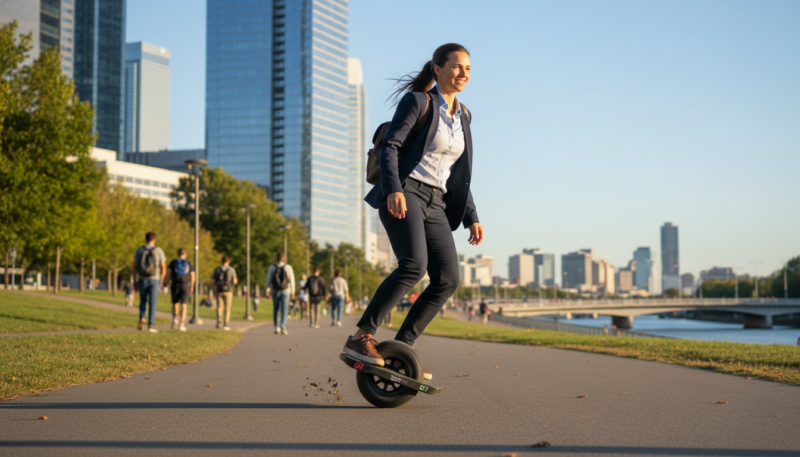
Onewheel GT: Best Ride Experience
The Onewheel GT offers an unparalleled riding experience with its unique single-wheel design and advanced technology. It’s ideal for commuters looking for a thrilling and efficient way to travel through the city.
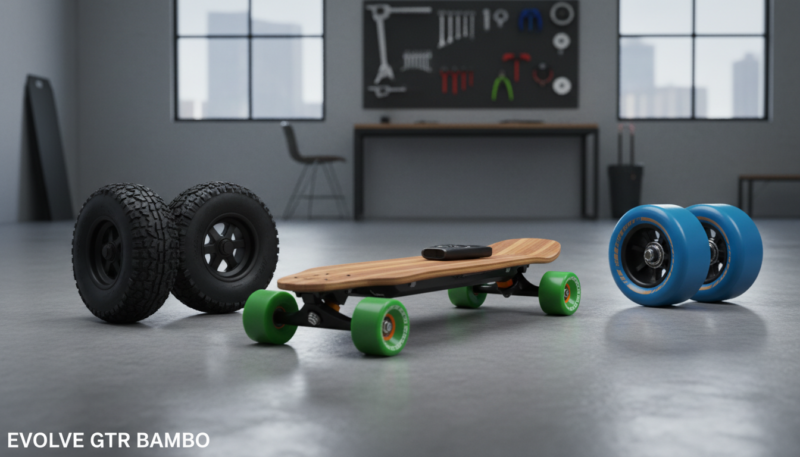
Evolve GTR Bamboo: Premium Urban Option
The Evolve GTR Bamboo is a premium electric skateboard designed for urban commuters. It features a flexible bamboo deck that provides superior vibration dampening, a dual-motor system for exceptional torque and acceleration, and the versatility of interchangeable wheel systems.
The board’s key features include its high-performance specifications, refined design elements, and multiple riding modes that accommodate riders of varying skill levels. While it comes at a premium price, its build quality, performance, and brand reputation make it a worthwhile investment for serious urban commuters.
All-Terrain Electric Skateboards for Diverse Urban Landscapes
As urban landscapes continue to evolve, the demand for versatile transportation solutions has led to the rise of all-terrain electric skateboards. These boards are designed to handle various urban environments, from smooth pavement to rough terrain, making them ideal for commuters who encounter diverse landscapes on their daily routes.
Ownboard Carbon Zeus Pro: Premium All-Terrain Performance
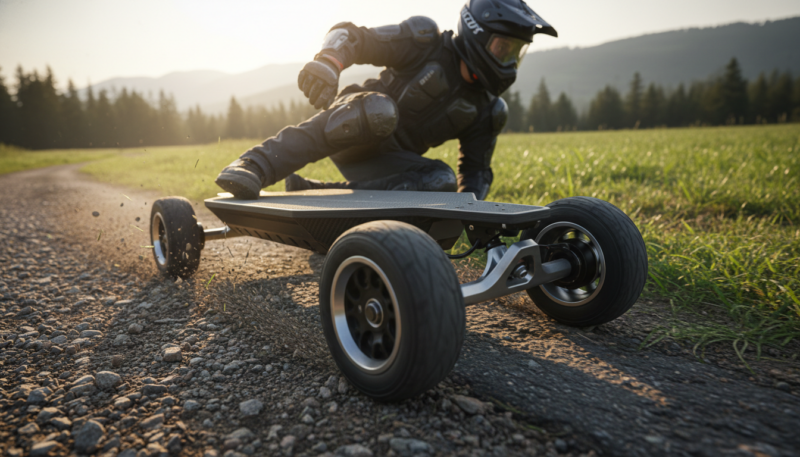
The Ownboard Carbon Zeus Pro is a premium all-terrain electric skateboard that offers exceptional performance and durability. With its robust construction and advanced technology, this board is capable of handling challenging terrain with ease.
JKing Jupiter-01: Budget-Friendly All-Terrain Option
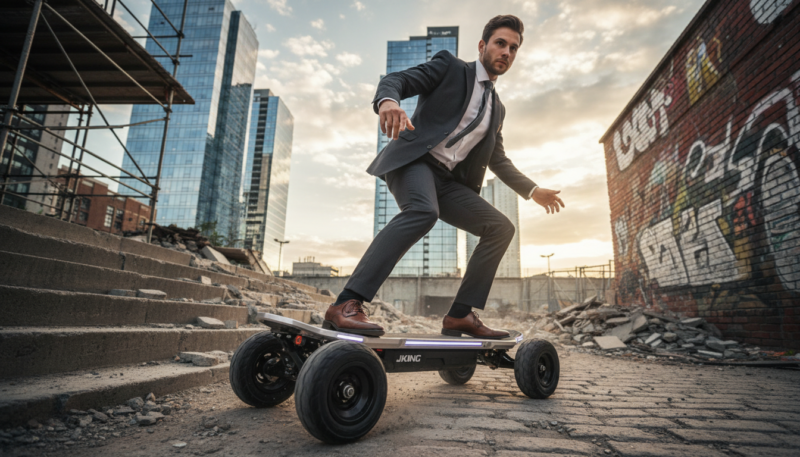
The JKing Jupiter-01 is an affordable all-terrain electric skateboard that delivers impressive performance without breaking the bank. Its standout feature is the innovative 6-inch honeycomb airless rubber tires, which provide smooth riding over varied surfaces without the risk of punctures.
The JKing Jupiter-01 offers several key benefits, including:
- Impressive all-terrain capabilities at an accessible price point
- Innovative 6-inch honeycomb airless rubber tires for reduced maintenance
- A top speed of 25.5 mph and a range of 12.3 miles, suitable for most urban commuting needs
- A belt drive system that delivers excellent torque for climbing hills and accelerating from stops
For urban riders who occasionally encounter construction zones, park shortcuts, or poorly maintained infrastructure, the JKing Jupiter-01 offers a compelling balance of all-terrain capability and affordability. You can explore more electric skateboard options at ecomobl.com.
Compact Electric Options for Crowded Cities
Compact electric skateboards are revolutionizing urban travel by offering a convenient and space-efficient commuting solution. These boards are designed to navigate through crowded city streets with ease, making them ideal for urban commuters.
Meepo Mini 3 Max: Portable Power
The Meepo Mini 3 Max is a compact electric skateboard that packs a punch. It’s designed for portability without compromising on performance.

Onewheel Pint: Single-Wheel Maneuverability
The Onewheel Pint offers exceptional maneuverability with its compact single-wheel design. It achieves a 10-mile range and a top speed of 14.2 mph, making it ideal for navigating crowded urban environments.
- The Onewheel Pint combines the unique self-balancing, single-wheel design with compact dimensions, creating an exceptionally maneuverable option for dense urban environments.
- With a 10-mile tested range, the Pint offers sufficient battery capacity for typical urban commuting distances.
- The board’s tight turning radius and nimble handling characteristics make it ideal for navigating crowded sidewalks and managing tight spaces.
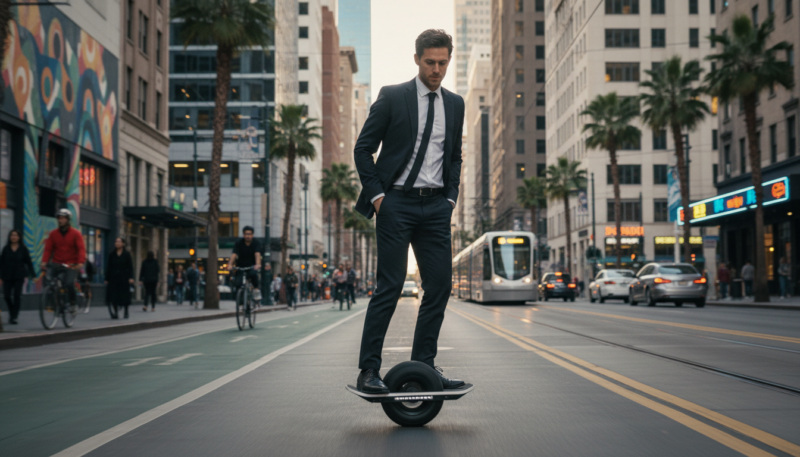
The Onewheel Pint’s self-balancing technology responds intuitively to subtle weight shifts, giving riders precise control. While its top speed is 14.2 mph, the Pint’s ability to maintain consistent speed over varied terrain often results in faster real-world travel times in typical urban conditions.
Manual Skateboards Worth Considering
When it comes to navigating city streets, manual skateboards offer a unique blend of exercise and enjoyment. For urban commuters, choosing the right type of manual skateboard can significantly enhance their travel experience.
Traditional Longboards for Urban Travel
Traditional longboards are a popular choice for urban travel due to their stability and comfort. They typically feature larger wheel sizes, often between 70-80mm, which helps in smoothing out the ride over uneven urban terrain. The longer deck length provides a stable platform, making them ideal for cruising through city streets.

Cruiser Boards for City Navigation
Cruiser boards represent an ideal middle ground between traditional skateboards and longboards, offering enhanced maneuverability while providing a smoother ride. Their compact size type makes them well-suited for urban environments where quick turns are necessary. Most cruiser boards feature softer, larger wheel sizes (typically 60-65mm), which provide better shock absorption. The shorter deck length compared to longboards makes them easier to carry and store, an important consideration for urban commuters. Many cruiser boards incorporate a kicktail design, enabling quick turns and manual lifting of the front wheels to navigate urban obstacles.
Cost Analysis: Electric vs. Manual Boards
Understanding the total cost of ownership is crucial when deciding between electric and manual skateboards. The financial implications of choosing between these two options extend beyond the initial purchase price, involving various factors that affect their overall cost.
Initial Investment Comparison
The initial cost of electric skateboards is generally higher than that of manual skateboards. Electric skateboards can range from a few hundred to over a thousand dollars, depending on the brand, quality, and features. In contrast, manual skateboards are typically less expensive, with prices starting from around $100 for a basic setup. The higher initial investment in electric skateboards is due to their complex technology, including motors, batteries, and electronic controls.
Long-term Maintenance and Value
While manual skateboards have lower initial costs and minimal long-term maintenance expenses, electric skateboards require more upkeep due to their complex mechanical and electronic systems. The most significant long-term expense for electric skateboard owners is battery replacement, which can cost between $150-400. Additionally, belt-drive systems require periodic belt replacements. In contrast, manual skateboards only need occasional bearing replacements and new wheels when worn. When considering the total cost of ownership over 3-5 years, the price premium for electric skateboards extends beyond the initial purchase price, though this may be offset by their practical transportation value for regular commuters.
Battery Life and Charging Considerations
Understanding the battery life and charging requirements of electric skateboards is essential for urban commuters. The convenience of electric skateboards for city travel is significantly influenced by their battery performance and charging needs.
Typical Range Expectations
Electric skateboard range varies significantly between models. Budget-friendly options like the Meepo V5 and Onewheel Pint offer ranges of 10-11 miles, while mid-range models such as the JKing Jupiter-01 provide 12-15 miles. Premium boards like the Backfire Zealot S2 (26.1 miles) and Ownboard Carbon Zeus Pro (33.3 miles) deliver extended ranges, making them suitable for longer commutes.
Riders must consider these range expectations when choosing an electric skateboard, ensuring it meets their daily commuting needs.
Charging Infrastructure in Urban Areas
Electric skateboard riders need to consider the availability of charging infrastructure in urban areas. Most boards require 2-5 hours to fully recharge, necessitating access to power outlets during extended outings. Unlike electric cars, electric skateboard charging relies on standard wall outlets found in cafes, libraries, offices, and public spaces.
- Riders often adopt a routine of charging their boards overnight and at their destination to ensure sufficient battery capacity for round-trip travel.
- Portable power banks capable of charging electric skateboards are gaining popularity, though they add weight and typically provide only partial charges.
- Some urban environments are installing USB charging stations and general-purpose outlets in public spaces, improving charging infrastructure for electric skateboard riders.
The time required for charging is a significant consideration for electric skateboard commuters, potentially limiting spontaneity and requiring more deliberate trip planning. Riders must make sure they have access to charging points along their route or at their destination.
Safety Aspects of Electric and Manual Skateboards
The safety of skateboarders is influenced by various factors including the type of board used. Both electric and manual skateboards have unique safety considerations that riders must be aware of to minimize risks.
Braking Systems and Stopping Distance
Electric skateboards offer advanced braking systems, including regenerative braking, which can significantly reduce stopping distances. Manual skateboards, on the other hand, rely on the rider’s ability to brake using foot friction or by stepping off. Understanding the braking capabilities of your skateboard is crucial for safe riding.
Speed Control and Stability
Electric skateboards provide multiple riding modes that allow riders to select appropriate speed and response characteristics based on their skill level and environment. This feature is crucial for maintaining control and stability, especially for new riders. Manual skateboards require riders to control speed through shifting weight and applying pressure on the board.
Protective Gear Recommendations
Wearing protective gear is essential for both electric and manual skateboard riders. A certified helmet is the minimum safety requirement, with full-face helmets recommended for electric skateboard users who regularly exceed 20 mph. Additional protective gear includes:
- Wrist guards to prevent wrist fractures during falls
- Elbow and knee pads for impact protection
- Reflective clothing and lights for visibility in low-light conditions
Riders should make sure to wear complete protective gear, especially during the learning phase, to ensure their safety while riding.
Legal Considerations for Urban Riders
As urban riders increasingly adopt skateboards for their daily commutes, understanding the legal landscape becomes crucial. The regulations governing skateboard use in cities vary widely, affecting both electric and manual skateboards.
Regulations for Electric Skateboards in Cities
Electric skateboards are subject to specific regulations that differ from city to city. Some municipalities treat them similarly to bicycles, while others impose stricter rules.
- Bike lanes are commonly permitted areas for electric skateboards, offering a safe and efficient route for commuters.
- Sidewalk riding regulations vary, with many cities prohibiting electric skateboard use in business districts.
Where You Can Legally Ride
Understanding where you can legally ride your skateboard is essential for urban commuters. Permitted areas include:
- Multi-use paths and recreational trails, though some jurisdictions may distinguish between manual and electric boards.
- University and corporate campuses, which often have their own regulations and designated routes.
- Private property, such as parking lots and plazas, where skateboard use is permitted by the property owners.
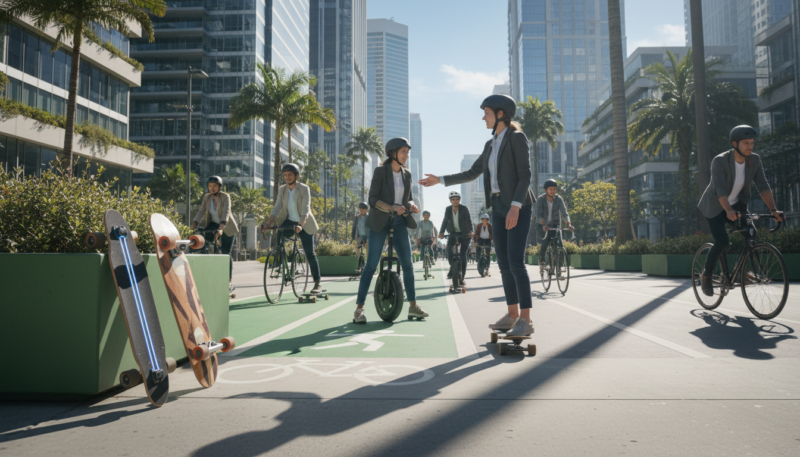
For urban commuters, knowing the legal riding network in their city is vital for planning efficient routes and maximizing the benefits of skateboard transportation.
Environmental Impact Comparison
As urban transportation evolves, understanding the ecological footprint of electric and manual skateboards becomes increasingly important. This comparison helps consumers make informed decisions that align with their environmental values.
Carbon Footprint of Electric vs. Manual Boards
The carbon footprint of electric skateboards is influenced by their battery-powered operation, while manual boards rely on human power. Key factors to consider include:
- Battery recyclability for electric skateboards, with improving lithium-ion recycling technologies
- The energy expenditure associated with manufacturing and distribution processes
- The materials used in construction, such as sustainable deck materials like bamboo
Sustainability Factors to Consider
When evaluating the sustainability of skateboards, several factors come into play. These include:
- The durability and repairability of components, with modular designs offering superior environmental performance
- The transportation footprint associated with manufacturing and distribution, favoring locally produced boards
- The adoption of transparent environmental practices by manufacturers, such as lifecycle assessments and take-back programs
For environmentally conscious consumers, choosing high-quality, durable boards designed for longevity and repair is a sustainable approach.
Choosing Between Electric and Manual Based on Your Urban Lifestyle
The choice between electric and manual skateboards largely depends on an individual’s urban lifestyle and commuting needs. Urban dwellers must consider various factors, including commute distance, terrain, and personal fitness goals, to make an informed decision.
Commute Distance and Terrain Assessment
When assessing commute distance and terrain, riders should consider the length and complexity of their daily travel. Electric skateboards are often preferred for longer commutes or hilly terrains due to their ability to conserve energy and maintain speed.
- Electric skateboards offer a significant advantage in terms of speed and endurance, making them suitable for longer commutes.
- Manual skateboards, while more physically demanding, provide an excellent workout and can be ideal for shorter distances.
| Feature | Electric Skateboard | Manual Skateboard |
|---|---|---|
| Commute Distance | Suitable for longer distances | Ideal for shorter distances |
| Terrain | Handles hilly terrains with ease | More challenging on hilly terrains |
Personal Fitness Goals and Preferences
Personal fitness goals significantly influence the choice between electric and manual skateboards. Riders seeking to incorporate physical activity into their daily commute often prefer manual skateboards, which can burn 300-500 calories per hour.
- Manual skateboards provide an excellent lower-body workout through pushing and balance engagement.
- Electric skateboards, while requiring less physical exertion, still engage core muscles for balance and control.
By considering these factors, urban commuters can make an informed decision that aligns with their lifestyle and preferences.
Conclusion: The Future of Urban Skateboard Travel
As cities evolve, the role of electric and manual skateboards in urban commuting is becoming increasingly significant. The rapid evolution of electric skateboard technology is enhancing the urban travel experience, with improvements in battery energy density, motor efficiency, and electronic control systems.
Several key trends are shaping the future of skateboard travel:
- Advances in technology are improving range, performance, and reliability for urban commuters.
- The integration of skateboard infrastructure in urban planning is recognizing boards as legitimate transportation options.
- Hybrid designs are emerging, combining the benefits of electric and manual boards.
- Regulatory frameworks are adapting to accommodate the unique characteristics of skateboard travel.
- Both electric and manual boards offer environmental benefits compared to car travel, positioning them as key components of sustainable urban mobility.
As urban density increases, the space efficiency and flexibility of skateboard travel suggest a promising future for both electric and manual boards in urban transportation. With ongoing advancements in technology and infrastructure, skateboards are set to play a significant role in the future of urban travel.
FAQ
What is the top speed of most boards?
Most boards have a top speed ranging from 20 to 28 mph, depending on the model, motor power, and wheel size. Some high-performance models can reach speeds of up to 30 mph or more.
How do regenerative braking systems work?
Regenerative braking captures some of the kinetic energy and converts it back into battery power, extending the range and improving overall efficiency. This feature is particularly useful for riders who frequently stop and start during their commute.
What are the benefits of hub motors compared to belt drives?
Hub motors provide a more compact design, reduced maintenance, and smoother acceleration. Belt drives, on the other hand, offer more flexibility in terms of gearing and can be more efficient at high speeds.
How long does it take to charge a board’s battery?
Charging times vary depending on the battery capacity and charger output. Typically, a full charge can take anywhere from 2 to 6 hours. Some high-capacity batteries may require longer charging times.
Are there any specific regulations for riding in urban areas?
Regulations vary by city and jurisdiction. Riders should familiarize themselves with local laws and regulations regarding skateboarding, including any specific rules or restrictions on where they can ride.
How do I choose the right wheel size for my commute?
Wheel size depends on the terrain and personal preference. Larger wheels (around 90mm) are suitable for longer commutes and rougher terrain, while smaller wheels (around 70mm) are better for shorter distances and smoother surfaces.
What is the average range of a board on a single charge?
The average range varies depending on factors like battery capacity, rider weight, and terrain. Typically, ranges can vary from 6 to 20 miles on a single charge, with some high-capacity models offering even longer ranges.
Can I ride in wet conditions?
While some boards are designed to be water-resistant, riding in wet conditions can still pose risks. Water can damage the board’s components, and slippery surfaces can be hazardous. Riders should exercise caution and consider the board’s specifications before riding in wet conditions.
