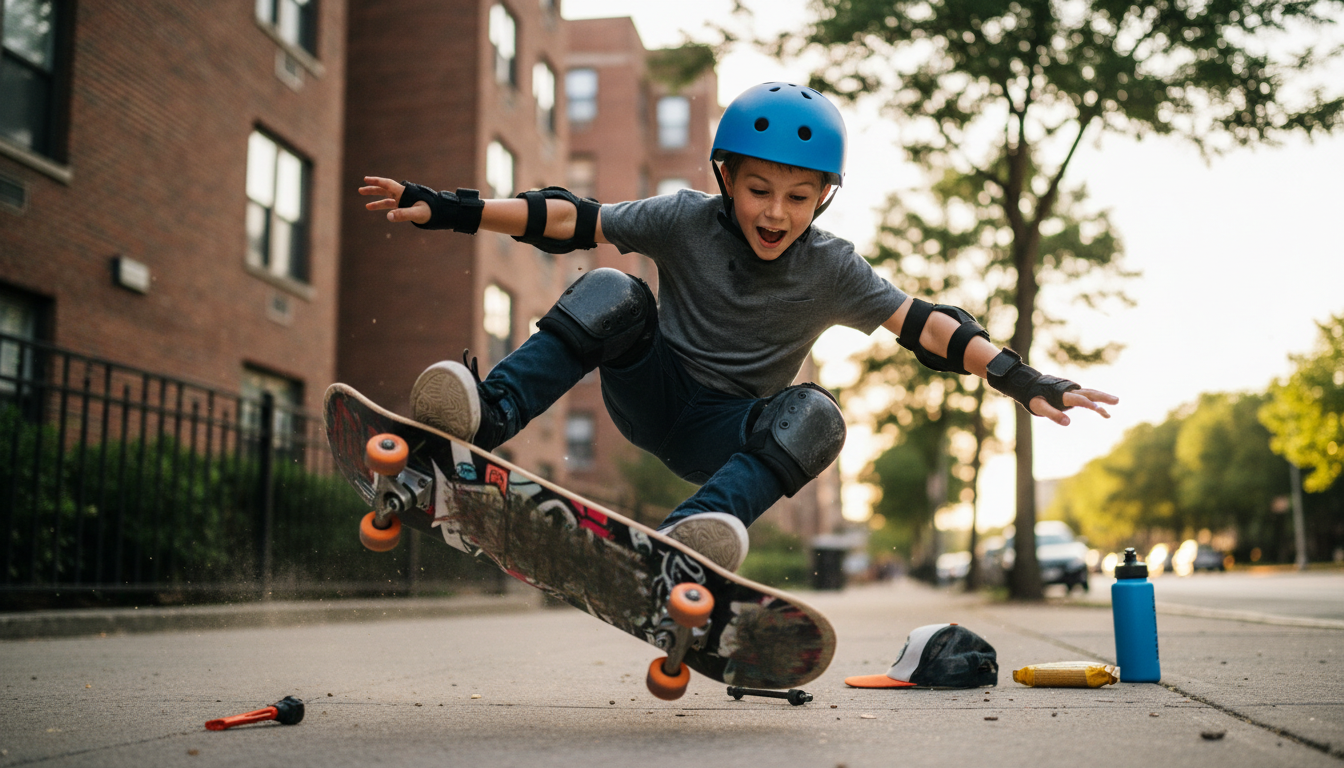
Skateboarding is an exhilarating sport that involves a certain level of risk. As Aaron Kyro, a sponsored skateboarder from the San Francisco Bay Area, aptly puts it, “Falling is inevitable. It’s going to happen. Welcome to skateboarding.” The reality is that falling is an inherent part of the learning and progression process in skateboarding.
Even professional skateboarders, who have mastered various techniques, still encounter falls. The key to minimizing the risk of injury lies in learning how to fall safely. Understanding the physics of falling and how to distribute the impact across the body can make a significant difference between a minor tumble and a serious injury.
By mastering the proper techniques for falling, skateboarders can not only reduce their risk of injury but also build confidence to attempt new tricks and progress faster in their skateboarding journey.
Why Learning to Fall is Essential for Skateboarders
Skateboarding inherently involves falling, making it essential to learn how to do so safely. As skateboarders progress in their skills, they inevitably encounter situations where they lose balance or fail to land a trick, leading to a fall. Understanding the importance of falling and how to do it correctly can significantly impact their learning curve and overall safety.
Falling: An Inevitable Part of the Learning Process
Falling is not a sign of failure in skateboarding but rather an essential part of the learning process. Every skateboarder, from beginners to professionals, experiences falls. The key difference lies in how they respond to these falls. Professional skateboarders have developed techniques to minimize injury risk while maximizing learning opportunities. By embracing falls as a natural part of their progression, skateboarders can foster a more positive and resilient approach to the sport.
| Benefits of Learning to Fall | Description |
|---|---|
| Reduced Fear | Learning to fall safely reduces the fear of attempting new tricks, allowing skateboarders to progress faster. |
| Increased Confidence | Understanding how to fall correctly boosts a skateboarder’s confidence, enabling them to try more challenging maneuvers. |
| Minimized Injury Risk | Proper falling techniques minimize the risk of injury, ensuring that skateboarders can continue to practice and improve without significant setbacks. |
The Direct Relationship Between Falling and Skill Progression
The relationship between falling and skill progression is direct; those who learn to fall safely are more willing to attempt challenging tricks that lead to advancement. By understanding that mistakes and falls are valuable learning tools, skateboarders can change their entire approach to the sport, focusing on progress rather than avoiding falls. As noted on Lemon8, the most successful skateboarders don’t focus on avoiding falls but rather on falling correctly when it inevitably happens.
Essential Safety Gear for Protecting Yourself When Falling
To minimize the risk of injury while skateboarding, it’s essential to wear the right safety gear. Proper safety equipment is the first line of defense against serious injuries when falling.
Helmets and Their Proper Fit
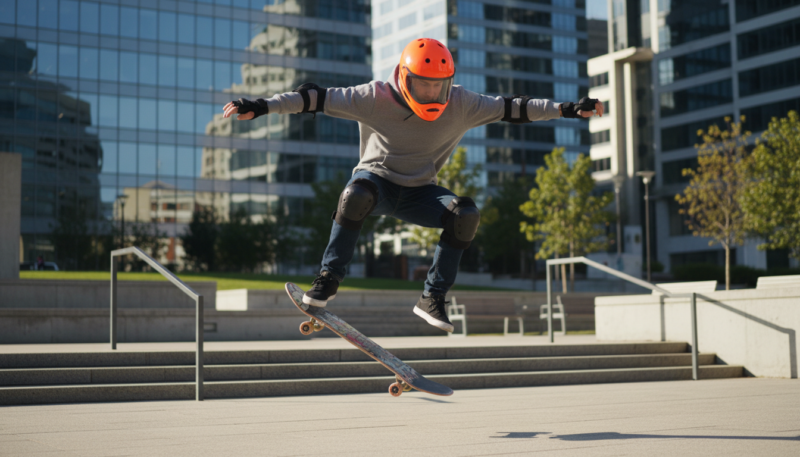
A helmet is non-negotiable for all skateboarders and must fit properly to protect the head effectively during falls. A well-fitting helmet can significantly reduce the risk of head injuries.
Wrist Guards: Your Most Important Protection
Wrist guards are considered the most important protective gear as wrist injuries are the most common in skateboarding due to the natural instinct to catch yourself with your hands. Quality wrist guards should have both palm and top-of-wrist protection with sturdy splints to prevent hyperextension.
Knee and Elbow Pads for Sliding Techniques
Knee pads are essential for learning sliding techniques that distribute impact during falls, especially for ramp and transition skating. Elbow pads complete the protection system and are particularly important for backward falls.
Professional skateboarders continue to wear full protective gear even at the highest levels of the sport, demonstrating its importance. For beginners, full protective gear creates a safety net that allows for more confident learning and experimentation.
How To Fall Safely While Riding A Skateboard: Key Techniques
The key to safe skateboarding lies not in avoiding falls entirely, but in learning how to fall effectively. Skateboarders can minimize the risk of injury by mastering specific falling techniques.
The “Rag-Doll” Technique for Forward Falls
When falling forward, the “Rag-Doll” technique involves loosening up your body instead of tensing. This allows your body to absorb the impact gradually, reducing the risk of injury. As you hit the ground, use your arms to push yourself away from your face and divert the impact to the side.
The “Parkour-Roll” Method for High-Speed Falls
For high-speed falls, the “Parkour-Roll” method is essential. It involves touching your fingers lightly to the ground, tucking your shoulders, and rolling across your back in a diagonal motion. This helps distribute the force of the impact and protects your head by tucking your chin to your chest.
The “Butt-Slide” Approach for Backward Falls
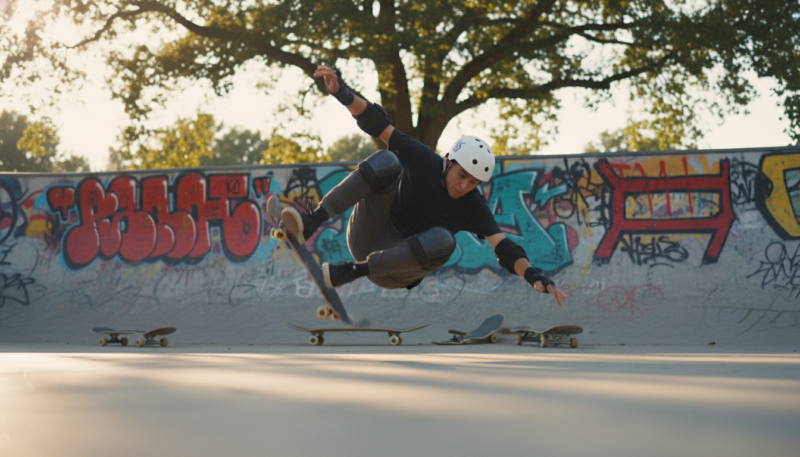
When falling backward, the “Butt-Slide” approach requires landing on the fleshy part of your backside while using your hands to control the slide. This helps prevent tailbone injuries by diverting some of the impact.
Knee-Slide Technique for Ramp Skating
For ramp skating, the Knee-Slide technique is particularly valuable. With proper knee pads, skateboarders can safely slide down the transition, reducing the risk of injury from falls at an angle.
| Falling Technique | Description | Benefit |
|---|---|---|
| “Rag-Doll” | Loosen body, hit ground, and divert impact to the side | Reduces injury risk by gradual impact absorption |
| “Parkour-Roll” | Touch fingers to ground, tuck shoulders, and roll diagonally | Distributes impact force and protects the head |
| “Butt-Slide” | Land on backside, use hands to control slide | Prevents tailbone injuries |
| Knee-Slide | Slide down transition with knee pads | Reduces injury risk from angled falls |
Mastering these falling techniques requires practice in controlled environments to transform potentially injurious falls into safer experiences.
Practicing Safe Falling Techniques
Practicing safe falling techniques is essential for skateboarders of all levels. To minimize the risk of injury, skateboarders must learn how to fall correctly, using their body positioning and protective gear to their advantage.
Controlled Practice Exercises Without a Board
Beginners should start by practicing falling techniques without a skateboard. This allows them to focus on the body mechanics of safe falling. Controlled practice exercises include kneeling at the edge of a ramp and sliding down on knee
pads to get comfortable with the sensation. Practicing transitions from standing to knee slides on flat ground also helps develop muscle memory.
Common Mistakes to Avoid When Falling
Skateboarders should be aware of common mistakes to avoid when falling, such as stiffening up during falls, extending arms with locked elbows, and trying to “catch” themselves with outstretched hands. Practicing all types of falls—forward, backward, and sideways—is crucial for being prepared for any situation that might occur while riding on ramps or on the ground.
- Practicing falling techniques in a controlled environment is essential before applying them in real skateboarding situations.
- Using soft surfaces like grass or foam pits during initial practice sessions can build confidence.
- Video recording practice sessions allows skateboarders to analyze their falling technique and identify areas for improvement.
Conclusion
To enjoy skateboarding for years, learning to fall safely is essential. Skateboarders should practice falling techniques regularly, incorporating them into their skate sessions, especially when learning new tricks.
Proper protective gear, including helmets, wrist guards, and pads, is crucial for minimizing the impact of falls.
For more tips on preventing injuries while riding, visit MaddGear’s blog.
With consistent practice and the right gear, skateboarders can minimize the risk of serious injuries and enjoy the sport.
FAQ
What is the most important safety gear for skateboarders?
A properly fitted helmet is the most crucial safety gear for skateboarders, as it protects the head from impact in the event of a fall. Brands like Bell Helmets and Smith Optics offer high-quality helmets that meet safety standards.
How can I protect my wrists while skateboarding?
Wearing wrist guards can significantly reduce the risk of wrist injuries. Look for wrist guards with rigid splints and cushioning, such as those made by Triple 8 or Pro-Tec, to absorb impact and provide support.
What is the "Rag-Doll" technique for falling?
The “Rag-Doll” technique involves relaxing the body and allowing it to crumple upon impact, distributing the force of the fall across multiple body parts. This technique can help reduce the risk of serious injury.
How can I practice falling safely without a skateboard?
Controlled practice exercises, such as rolling on a soft surface or practicing falling techniques on a gentle slope, can help build confidence and prepare skateboarders for potential falls.
What are some common mistakes to avoid when falling?
Common mistakes to avoid when falling include stiffening up, which can increase the risk of injury, and trying to break a fall with outstretched arms, which can lead to wrist or arm injuries. Instead, skateboarders should focus on rolling with the impact and using safety gear to protect themselves.
Are knee and elbow pads necessary for skateboarding?
Knee and elbow pads can provide additional protection for skateboarders, particularly when attempting sliding techniques or skating on ramps. Look for pads with a hard shell and soft underlayment, such as those made by Pro-Tec or 100%.
