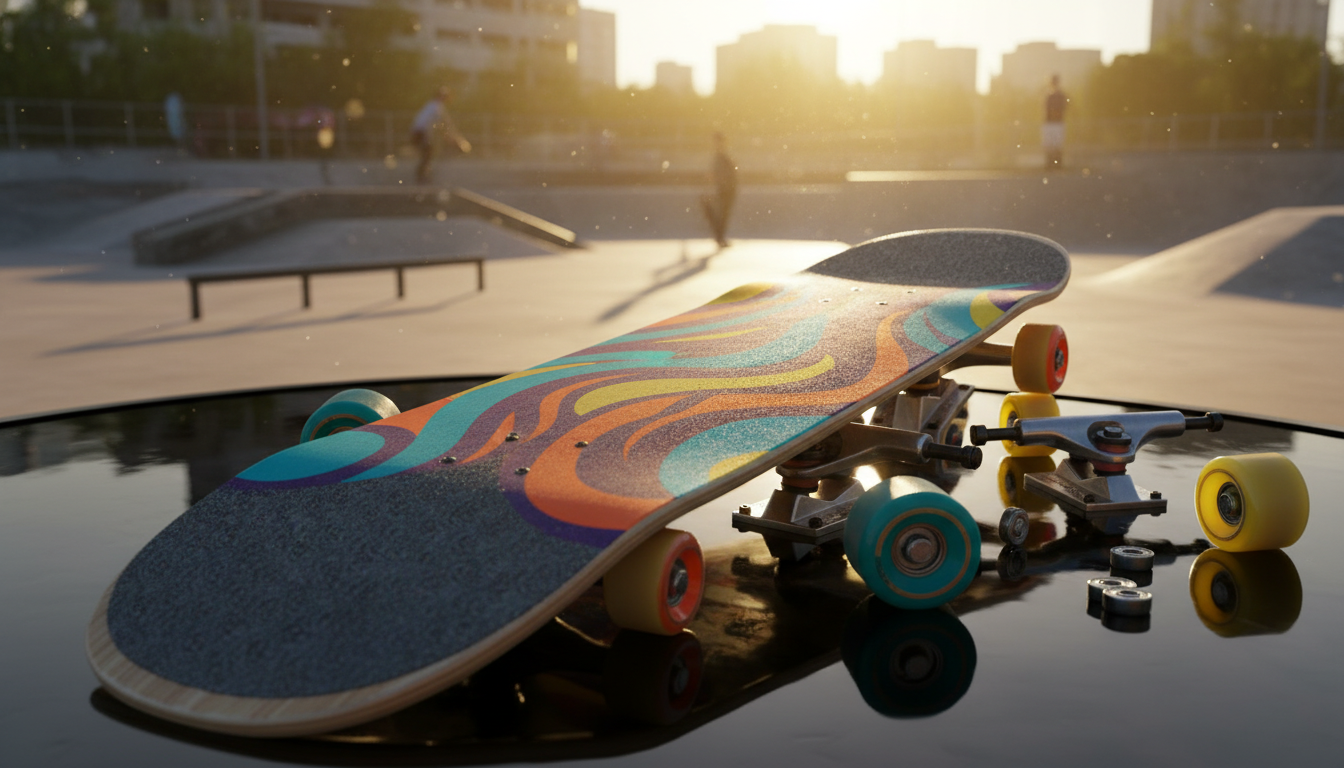
When it comes to skateboarding, choosing the right equipment is crucial for an optimal riding experience. Skaters often face a dilemma: whether to opt for a complete skateboard or customize their own setup with individual parts.
A complete skateboard comes pre-assembled with a deck, trucks, wheels, and bearings, offering convenience and ease of use. On the other hand, customizing a skateboard with separate parts allows skaters to tailor their setup to their specific needs and preferences.
This article will explore the differences between complete skateboard builds and custom part setups, analyzing performance characteristics, cost considerations, and suitability for different skating styles and skill levels.
Understanding Skateboard Builds
Skateboard builds are a crucial aspect of the skateboarding experience, offering riders a choice between pre-assembled boards and custom setups. The type of skateboard build a rider chooses can significantly impact their skating experience.
What Makes Up a Complete Skateboard
A complete skateboard is a pre-assembled package that includes all the necessary parts to get started with skateboarding. It typically consists of a standard popsicle-shaped skateboard deck, trucks, wheels, bearings, grip tape, and hardware. The deck is a fundamental component, providing the platform on which the rider stands.
Complete skateboards are manufactured to standard specifications, often featuring components from the same brand or partnered manufacturers. This ensures consistent quality across all parts, making it easier for beginners to get started.
| Component | Description |
|---|---|
| Deck | The platform on which the rider stands, typically made of wood. |
| Trucks | Metal T-shaped components that hold the wheels and allow for turning. |
| Wheels | Round components made of urethane that come into contact with the ground. |
What Defines a Custom Skateboard Setup
A custom skateboard setup involves selecting each component individually, allowing skaters to mix and match parts from different manufacturers. This approach enables riders to tailor their skateboard to their specific needs, such as choosing particular truck heights or wheel hardness.
Custom setups provide the flexibility to upgrade or replace individual components as needed, potentially extending the life of the skateboard. Riders can also personalize their board to suit their skating style, whether it’s for street skating, transition, or cruising.
Understanding the differences between complete and custom skateboard builds helps skaters determine which option best aligns with their experience level and skateboarding goals.
The Anatomy of a Skateboard
To appreciate the functionality of a skateboard, it’s essential to examine its individual parts. A skateboard is composed of several key components, each contributing to its overall performance and durability.
Decks: Sizes, Shapes, and Materials
The skateboard deck is the foundation of any setup, typically constructed from 7-ply maple wood, although some modern decks incorporate materials like bamboo, carbon fiber, or fiberglass for enhanced performance characteristics. Deck sizes vary widely, with widths typically ranging from 7.5″ to 9.5″ and lengths between 28″ and 32″, depending on rider size, shoe size, and skating style.
The construction and materials used in skateboard decks play a crucial role in their durability, flexibility, and overall performance. Some decks may incorporate carbon fiber or fiberglass layers to enhance strength and reduce weight.
| Deck Material | Width Range | Length Range |
|---|---|---|
| 7-ply Maple Wood | 7.5″-9.5″ | 28″-32″ |
| Bamboo/Carbon Fiber | 7.5″-9.5″ | 28″-32″ |
Trucks, Wheels, and Bearings
Trucks are the metal T-shaped components that attach to the underside of the deck and hold the wheels, with various heights and widths available to match different deck sizes and riding preferences. Wheels come in different diameters (50mm-60mm) and durometer ratings (hardness), with smaller, harder wheels preferred for technical street skating and larger, softer wheels better for cruising and transition skating.
Grip Tape, Hardware, and Accessories
Bearings, grip tape, hardware, and accessories like riser pads complete the setup, each contributing to the overall performance, feel, and customization options available to skaters. Grip tape provides traction, while hardware secures the trucks to the deck.
Complete Skateboard Builds: Pros and Cons
For those new to skateboarding, understanding the pros and cons of complete skateboard builds is crucial for making an informed decision. Complete skateboards are an excellent choice for beginners because they come pre-built with all the necessary parts to get you skating right away.
Advantages of Pre-Built Skateboards
One of the primary advantages of complete skateboard builds is their convenience and simplicity, making them ideal for beginners who may feel overwhelmed by component selection and assembly processes. Pre-built skateboards typically cost less than custom setups of comparable quality, offering good value for those just entering the sport or on a limited budget. Many complete builds are designed with beginners in mind, featuring component combinations that provide stability and forgiveness for developing fundamental skills.
Limitations of Complete Setups
However, complete setups often lack the performance optimization possible with custom builds, as components are selected for broad appeal rather than specific riding styles. Limited customization options and potentially lower-quality components in budget complete builds can restrict progression for intermediate and advanced skaters who develop more specific preferences.
To better understand the trade-offs, let’s examine a comparison of complete skateboards and custom setups:
| Feature | Complete Skateboard | Custom Setup |
|---|---|---|
| Convenience | High | Low |
| Cost | Generally Lower | Variable |
| Customization | Limited | High |
| Performance | General | Optimized |
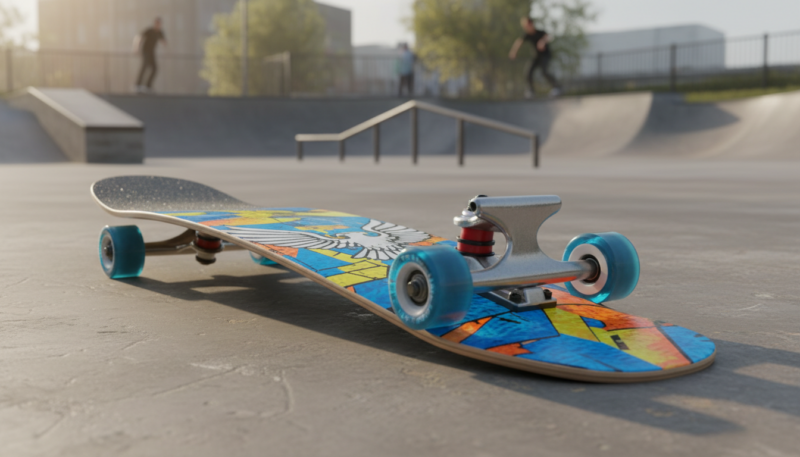
By weighing these factors, skaters can make an informed decision about whether a complete skateboard build or a custom setup is right for their needs and experience level.
Custom Skateboard Setups: Pros and Cons
The world of custom skateboard setups provides enthusiasts with the opportunity to craft a board that truly reflects their individuality and performance requirements. By selecting each component individually, skaters can tailor their skateboard to meet their specific needs, enhancing their overall skateboarding experience.
Benefits of Building Your Own Skateboard
Building a custom skateboard setup allows riders to select components based on personal preferences, skating style, and specific performance requirements. This customization enables skaters to choose premium parts where they matter most while potentially economizing on less critical components. The process of building a custom skateboard also provides valuable knowledge about skateboard mechanics and how different components interact to affect overall performance.
- Selecting components based on personal preferences and skating style
- Choosing premium parts for critical components
- Gaining knowledge about skateboard mechanics and component interaction
Challenges of Custom Builds
While custom skateboard setups offer numerous benefits, they also present several challenges. Custom builds require significant research and knowledge to ensure component compatibility and optimal performance characteristics. The higher initial investment for quality custom setups can be prohibitive for beginners who aren’t yet sure about their long-term commitment to skateboarding. Without proper guidance, first-time custom builders may select incompatible or improperly matched components, resulting in suboptimal performance despite the higher cost.
| Component | Considerations | Impact on Performance |
|---|---|---|
| Deck | Size, shape, material | Affects stability and maneuverability |
| Trucks | Width, height, material | Influences turning radius and durability |
| Wheels | Size, hardness, shape | Impacts speed, grip, and slide |
In conclusion, custom skateboard setups offer a unique blend of personalization and performance. While they present several benefits, including tailored component selection and enhanced knowledge, they also require significant research and investment. By understanding the pros and cons, skaters can make informed decisions about whether a custom setup is right for them.
Skateboard Builds Compared: Performance Analysis
Complete skateboard builds and custom setups have distinct performance characteristics that cater to different skating needs. The performance of a skateboard is influenced by various factors including the deck, trucks, wheels, and other components.
Ride Quality and Feel
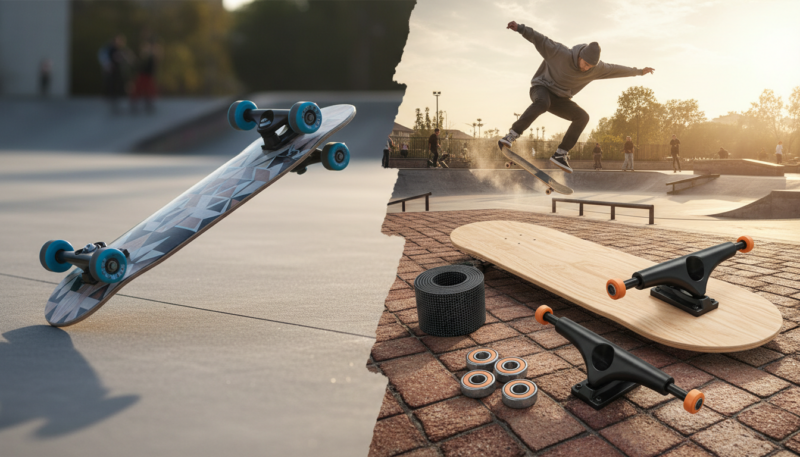
The ride quality of a skateboard differs significantly between complete and custom builds. Custom setups offer more refined performance characteristics tailored to specific skating environments and styles. For instance, a custom build with high-quality trucks and wheels can provide a smoother ride and better control.
Durability and Longevity
Durability is another critical aspect where complete and custom builds show variation. Higher-quality custom setups generally outlast budget complete builds, thanks to the selection of premium components. However, premium complete skateboards can offer comparable longevity.
| Build Type | Ride Quality | Durability |
|---|---|---|
| Complete Build | Standard | Variable |
| Custom Setup | Customizable | Generally Higher |
Trick Capability
The ability to perform tricks is significantly influenced by the skateboard’s setup. Custom setups designed for specific disciplines like street skating or transition riding can enhance trick capability. The shape and size of the deck, for example, can impact a skater’s ability to perform certain tricks.
For skaters looking to optimize their performance, whether for tricks, cruising, or other styles, understanding the differences between complete and custom skateboard builds is crucial. Advanced skaters, in particular, can benefit from the precision tuning possible with custom component selection.
Cost Comparison: Complete vs. Custom
The world of skateboarding offers two primary paths for enthusiasts: complete skateboards and custom builds, each with its own cost implications. When deciding between these options, understanding the financial investment required for each is crucial.
Price Breakdown of Complete Skateboards
Complete skateboards offer an economical entry point for beginners and casual skaters, typically ranging from $70 to $150. However, budget complete setups often feature lower-quality components that may need replacement sooner, potentially increasing long-term costs. For instance, a skateboard deck may need to be replaced after a few weeks to a year, depending on skating frequency and style.
Investment in Custom Part Setups
Custom skateboard builds generally start around $120-$200 for a basic setup with quality components, while premium builds can easily exceed $250-$300. Although the initial investment for custom setups is higher, the ability to replace individual worn components rather than the entire setup can reduce long-term costs for dedicated skaters. For more information on custom skateboard builds, you can visit SkatesUSA’s guide.
Ultimately, the cost-benefit analysis varies based on skating frequency, style, and progression rate. More frequent skaters typically benefit from the durability and component-specific replacement options of custom builds. Some skaters adopt a hybrid approach, starting with a complete setup and gradually upgrading individual components as they wear out or as their skill level increases.
Choosing Based on Skating Style
Different skating disciplines require distinct skateboard setups to maximize efficiency and enjoyment. The type of skating one engages in most frequently—be it street skating, transition and park skating, or cruising and transportation—significantly influences the choice between a complete skateboard build and a custom part setup.
Street Skating Considerations
Street skaters typically prefer decks with a symmetrical shape and a popsicle-stick design, allowing for quick, sharp turns and flips. For optimal performance, street skating demands lighter, more responsive setups with medium-hard wheels (99A-101A) and standard-height trucks.
Custom builds offer street skaters the ability to fine-tune their setup for specific tricks or obstacles. However, quality complete builds designed specifically for street skating can provide good all-around performance.
Transition and Park Skating Needs
Transition and park skating benefit from wider decks (8.25″-8.75″) for stability and speed in bowls, ramps, and other transitions. Higher trucks for a greater turning radius and slightly softer wheels (97A-99A) enhance grip on smooth concrete surfaces.
Custom setups excel for transition skaters who require specific truck geometry for carving bowls or particular wheel profiles for maintaining speed through transitions.
Cruising and Transportation Requirements
Transportation-focused setups prioritize comfortable cruising with softer wheels (78A-87A), stable trucks, and often slightly longer wheelbases. Both complete cruiser builds and custom configurations can meet these needs, offering a smooth ride for commuting or recreational cruising.
| Skating Style | Deck Preference | Truck Height | Wheel Hardness |
|---|---|---|---|
| Street Skating | Symmetrical, Popsicle-stick | Standard | 99A-101A |
| Transition/Park | Wider (8.25″-8.75″) | Higher | 97A-99A |
| Cruising/Transport | Often longer wheelbase | Stable | 78A-87A |
Beginner’s Guide to Skateboard Selection
Choosing the perfect skateboard as a beginner involves understanding the various components and styles. Skateboards come in different shapes and sizes, each designed for specific skating styles.
First-Time Buyer Recommendations
Beginners are generally best served by mid-range complete skateboards that offer reliable performance without overwhelming customization options or premium pricing.
First-time buyers should focus on standard dimensions: deck widths between 7.75″-8.25″, mid-range truck heights, and wheels around 52-54mm with medium hardness (97A-99A) for versatility. Complete builds from reputable skateboard brands, like those found on SkatePro, provide beginners with properly matched components and balanced performance characteristics for learning fundamental skills.
When to Upgrade from Complete to Custom
The ideal time to transition from complete to custom typically comes when skaters develop clear preferences about their riding style and can identify specific performance limitations in their current setup.
Most skaters benefit from upgrading to custom setups after 6-12 months of consistent skating, when they’ve developed enough experience to make informed component choices. When upgrading, many skaters start by replacing the most impactful components first (typically deck and trucks) while maintaining other parts from their complete setup.
Advanced Skater Considerations
For experienced skaters, fine-tuning their skateboard setup is essential for achieving the desired performance and style. Advanced skaters benefit significantly from custom setups that can be precisely configured for specific trick types, skating environments, or competition requirements.
Fine-Tuning Your Setup for Specific Tricks
Fine-tuning your setup for specific tricks involves selecting components that enhance your ability to perform those tricks. For example, a slightly wider skateboard deck might provide more stability for landing complex flip tricks, while a narrower deck might make it easier to execute quick, technical maneuvers.
Advanced customization options include specialized deck constructions, precision truck geometries, and performance wheel formulations not typically found in complete builds. Fine-tuning truck tightness, wheel hardness, and bearing quality allows experienced skaters to optimize their setup for particular tricks or skating disciplines.
Professional Setups and Preferences
Professional skaters typically develop highly personalized setups through extensive experimentation, often combining specific truck geometries, unique deck concaves, and precise wheel formulations. Many pros maintain different setups for various skating scenarios: one for technical street lines, another for transition contests, and perhaps a third for filming particularly challenging tricks.
The ability to adjust component specifications by small increments becomes increasingly important as skill level advances, with subtle changes in truck height or wheel diameter significantly impacting trick execution.
Popular Brands and Models
The world of skateboarding is populated by a diverse array of brands catering to different skating styles and preferences. When looking for a skateboard, whether complete or custom-built, several top brands stand out for their quality and performance.
Top Complete Skateboard Brands
Leading complete skateboard brands include Element, Powell-Peralta, Santa Cruz, and Globe. Each of these brands offers various pre-built options at different price points and for different skating styles. Quality complete builds typically feature consistent component matching and reliable performance, making them a great choice for both beginners and experienced skaters.
Quality Component Manufacturers
For those looking to build their own custom skateboards, there are numerous quality component manufacturers to choose from. Deck manufacturers like Real, Baker, Girl, and Almost offer diverse shapes, sizes, and construction technologies. Truck manufacturers Independent, Thunder, and Venture dominate the market with various heights, widths, and geometries. Premium wheel brands like Spitfire, Bones, and OJ offer specialized formulations for different surfaces and skating styles.
Conclusion
For skateboarders, deciding between a complete skateboard build and a custom part setup is a critical decision that affects their skating experience. The choice ultimately depends on individual factors, including skill level, budget constraints, and specific skateboarding goals.
Beginners and casual skaters often benefit from quality complete skateboards that offer convenience and reliable performance. As skaters progress, the customization options and performance benefits of custom setups become more valuable.
Understanding the fundamental components of a skateboard, such as the deck, trucks, and wheels, is essential for making informed decisions. Whether choosing a complete build or custom setup, selecting components that match your skating style and skill level will yield the best results.
The skateboarding industry continues to innovate, offering more options than ever before. By considering your needs and preferences, you can make an informed choice that enhances your skateboarding experience.
FAQ
What is the ideal deck size for street skating?
For street skating, a deck size between 7.5 and 8.5 inches is recommended, as it provides a good balance between control and stability. The width of the deck should be chosen based on the skater’s shoe size and personal preference.
How often should I replace my skateboard wheels?
The frequency of replacing skateboard wheels depends on the skating frequency, style, and terrain. On average, wheels should be replaced every 1-3 months for regular skaters. Signs that indicate the need for replacement include worn-down wheels, reduced performance, and increased vibration.
What is the difference between a complete skateboard and a custom setup?
A complete skateboard is a pre-assembled unit that includes all the necessary components, whereas a custom setup allows skaters to choose individual parts to create a tailored board that suits their specific needs and preferences.
Can I mix and match different brands for my skateboard components?
Yes, it is possible to mix and match different brands for skateboard components. Many skaters prefer to combine parts from various manufacturers to achieve their desired performance, style, and durability. However, compatibility and quality should be considered when mixing brands.
How do I choose the right truck width for my skateboard?
The truck width should be chosen based on the deck width. A general rule of thumb is to select trucks that are roughly the same width as the deck or slightly narrower. This ensures optimal performance, stability, and control.
What are the benefits of using high-quality bearings?
High-quality bearings provide several benefits, including smoother rolling, reduced friction, and increased durability. They can also improve the overall performance and responsiveness of the skateboard.
How do I maintain my skateboard to prolong its lifespan?
Regular maintenance is essential to extend the lifespan of a skateboard. This includes cleaning the bearings, tightening loose hardware, and inspecting the deck and other components for damage or wear.
