Choosing the right skateboard can be overwhelming for new skaters, given the numerous options available. The individual parts of a skateboard may seem similar at first glance, but several factors must be considered to find the perfect board tailored to your needs.
Different types of skateboards are designed for various terrains, and the right choice depends on where and how you want to skate. A proper setup is crucial for developing skills safely and effectively.
This comprehensive guide will cover the essential aspects of choosing your first skateboard, from selecting the appropriate deck size to understanding truck width compatibility and wheel hardness ratings, ensuring you have the knowledge to make an informed decision.
Understanding Skateboard Components
A skateboard is more than just a single piece of wood; it’s a complex assembly of multiple parts working together. Understanding these components is crucial for beginners to make informed decisions when setting up their first skateboard.
The Anatomy of a Complete Skateboard
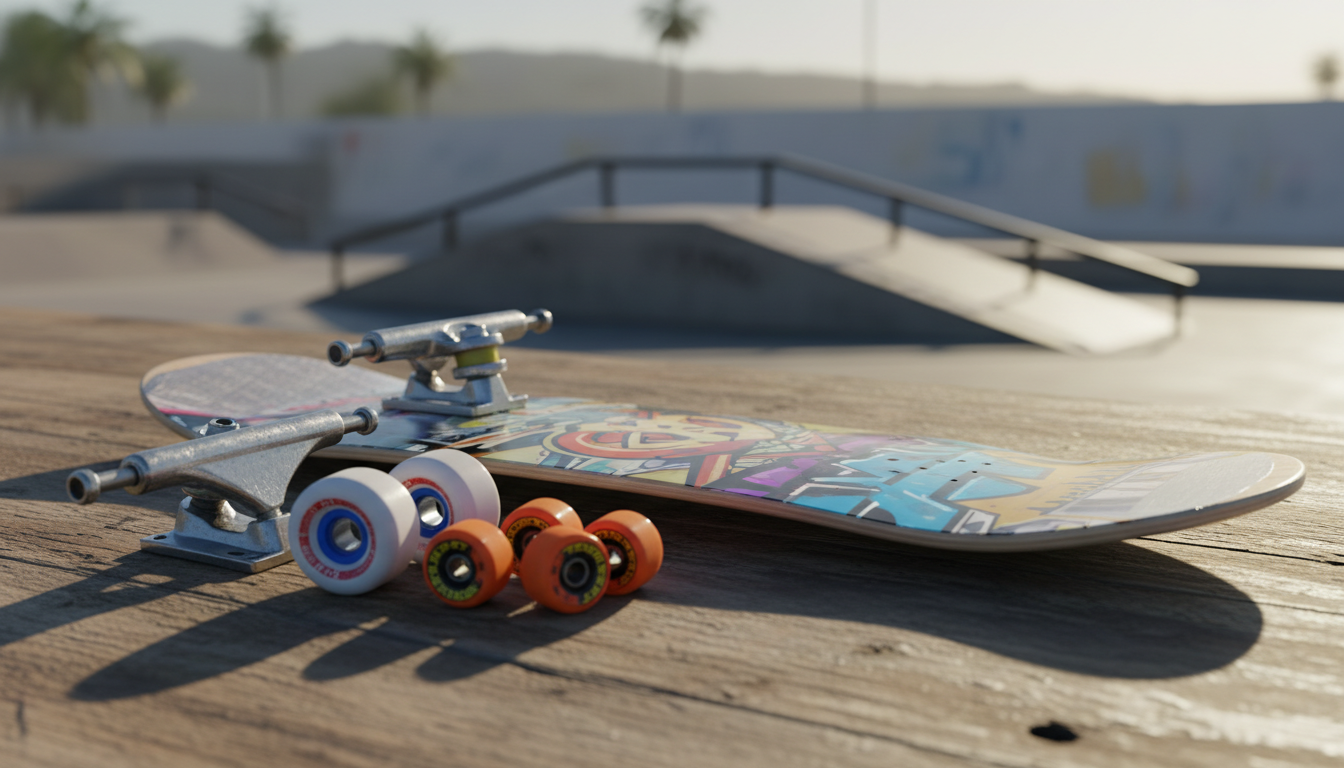
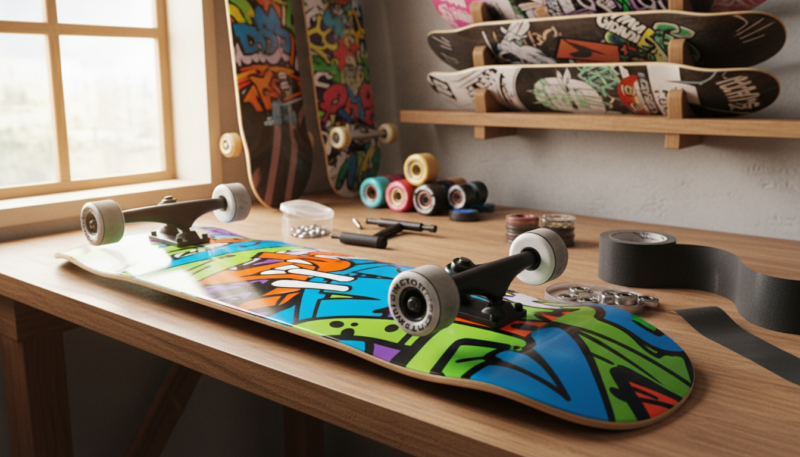
A complete skateboard consists of several key components: the deck, trucks, wheels, bearings, grip tape, and hardware. The deck is the foundation, typically made from 7-ply maple wood, providing a concave shape for better control.
Trucks are metal axles that attach to the deck, allowing for turning and grinding. They consist of a baseplate, hanger, kingpin, and bushings, determining the responsiveness of turns. Wheels come in various sizes and hardness levels, with medium-sized wheels (52-54mm) and moderate hardness (90-99A) recommended for beginners.
Quality vs. Price: What Matters for Beginners
For those new to skateboarding, balancing quality and price is essential. Investing in a decent deck and trucks will enhance performance and durability. Components like bearings can be more budget-friendly initially and upgraded later. This approach allows beginners to enjoy a good skateboarding experience without breaking the bank.
When selecting a skateboard, it’s also important to consider the overall quality of the components. While it’s tempting to opt for the cheapest option, a slightly higher investment in quality parts can significantly improve the skateboarding experience.
Choosing the Right Skateboard Deck

The skateboard deck is the foundation of a skateboard, and picking the right one can significantly impact a beginner’s progression. When talking about the size of a skateboard deck, it’s usually the width that’s being referred to. The length can also play a role, but the deck width is more important at the beginning.
Deck Width and Length: Finding Your Size
Deck width is the most critical measurement when selecting a skateboard deck, typically ranging from 7.5″ to 8.5″ for standard skateboards. The width directly impacts stability, trick performance, and overall comfort. Deck length, usually between 28″ and 32″, affects the wheelbase and overall feel of the board. Longer decks provide more stability at speed, while shorter decks offer better maneuverability for technical tricks.
How Shoe Size Relates to Deck Width
Your shoe size has a direct correlation to the ideal deck width. Larger feet generally require wider decks to provide an adequate standing platform and prevent toe or heel drag during tricks. Beginners with US men’s shoe sizes 6-8 typically feel comfortable on decks 7.5″-7.75″ wide, while sizes 9-12 often prefer 8.0″-8.5″ decks for better stability and landing surface.
Understanding Deck Shapes and Concaves
Modern skateboard decks come in various shapes and concave profiles. The standard “popsicle” shape is versatile for beginners, while the concave (curvature from edge to edge) helps with foot placement and board control during tricks. You can explore different deck options at Skatepro.com, which offers a wide range of skateboard decks from various brands.
Selecting Skateboard Trucks for Beginners

The right skateboard trucks can make a significant difference in a beginner’s ability to balance and maneuver. Skateboard trucks are a critical component of a skateboard, influencing its stability, turning ability, and overall performance.
Truck Width and Compatibility with Decks
Skateboard trucks must be properly matched to the deck width to prevent wheel bite and maintain proper stability. As a general rule, the truck axle width should be within 1/4″ of the deck width. This compatibility ensures that the skateboard responds well to the rider’s movements.
High vs. Low Trucks: Which to Choose
Trucks come in different height profiles, including high, mid, and low. Low trucks provide better stability for technical street skating, while high trucks allow for looser turning and help prevent wheel bite when using larger wheels. The choice between high and low trucks depends on the rider’s style and preferences.
Truck Tightness and Turning Ability
The tightness of the trucks, adjusted via the kingpin nut, significantly affects the skateboard’s turning ability. Beginners should start with a medium truck tightness that allows for some turning responsiveness without being too loose. Adjusting the kingpin nut can change the riding characteristics of the skateboard, making it more or less responsive to the rider’s weight shifts.
By understanding the role of truck width, height, and tightness, beginners can make informed decisions when selecting skateboard trucks that suit their riding style and needs.
Beginner Skateboard Setup: Wheels and Bearings
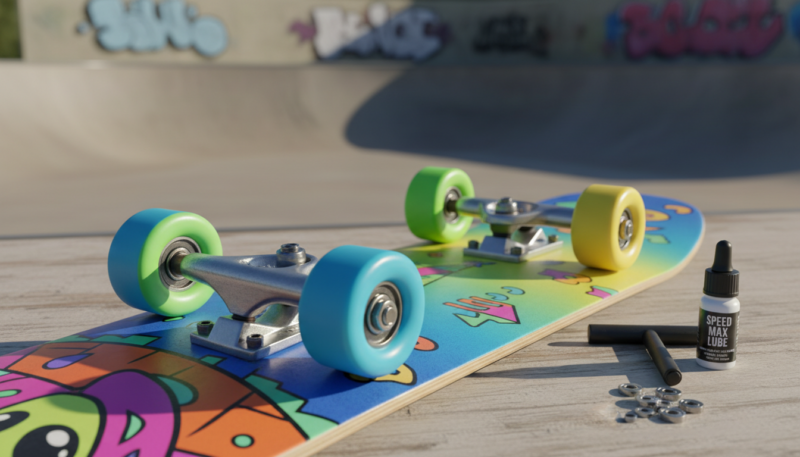
Wheels and bearings are vital elements in a skateboard that determine its speed, smoothness, and overall ride quality. As a beginner, understanding the different types of wheels and bearings and how they impact your skateboarding experience is crucial.
Wheel Size: Finding the Right Diameter
Wheel size significantly impacts your skateboard’s performance. Smaller wheels (50-53mm) accelerate quickly and are ideal for technical street skating, while larger wheels (54-60mm) maintain speed better and provide smoother rides over rough surfaces. For beginners learning in skateparks or on smooth surfaces, wheels in the 52-54mm range offer a good balance of acceleration and stability.
Wheel Hardness: Understanding Durometer Ratings
Wheel hardness is measured on the A scale, with higher numbers indicating harder wheels. Beginners should generally start with wheels in the 92A-99A range, which provides a balance of grip and slide capability. Softer wheels (78A-87A) absorb more shock on rough surfaces but are slower and “stickier,” while harder wheels (99A+) are faster on smooth surfaces but can be unstable on rough terrain.
Bearing Selection for Smooth Rolling
Bearings are rated on the ABEC scale (1-9), though this rating is less important than overall quality. Beginners should look for reliable options like “Reds” bearings that offer good performance without breaking the bank. High-quality bearings ensure smooth rolling and reduce the risk of damage to other skateboard components.
Grip Tape and Hardware Essentials
Grip tape and hardware are the unsung heroes of skateboard setup, providing control and stability. A skateboard’s functionality is significantly enhanced by the quality and proper installation of these components.
Choosing and Applying Grip Tape
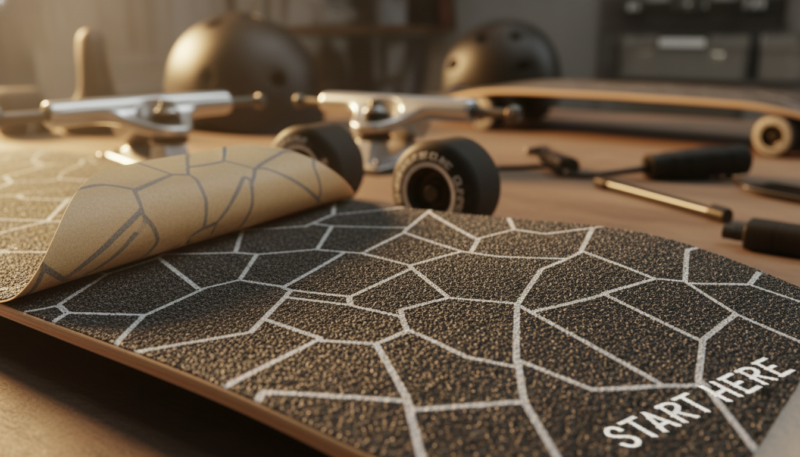
Grip tape is the abrasive material applied to the top of the skateboard deck, providing traction for the rider’s feet. When selecting grip tape, beginners often prefer black grip tape as it shows less dirt and wear over time.
Applying grip tape properly is crucial; it should be laid down carefully from one end to avoid air bubbles and then trimmed around the edges for a clean finish.
Hardware Selection: Nuts, Bolts, and Risers
Hardware refers to the nuts and bolts that attach the trucks to the deck. Standard hardware lengths are between 7/8″ to 1″, but longer bolts are required when using riser pads.
Riser pads are plastic spacers that can prevent wheel bite and absorb shock, making them a consideration for beginners using larger wheels (54mm+).
Assembling Your First Skateboard
Assembling your first skateboard is an exciting step into the world of skateboarding. With all the necessary components ready, you can now build a skateboard tailored to your preferences.
Tools You’ll Need for Assembly
To assemble your skateboard, you’ll need a few basic tools. These include a skate tool or a combination of a socket wrench and Phillips head screwdriver, a razor blade for applying grip tape, and potentially a bearing press for installing bearings.
Step-by-Step Assembly Guide
Begin by applying grip tape to your clean deck surface, working from one end to the other to avoid air bubbles. Use a razor blade to trim the excess grip tape carefully.
Next, install the trucks by aligning them with the pre-drilled holes on the deck. Insert the mounting hardware from the top and secure the nuts from the bottom. Ensure the kingpins are pointing towards the center of the board.
Then, press the bearings into the wheels using the truck axle or a bearing press. Mount the wheels onto the truck axles, ensuring they spin freely. Finally, tighten all hardware appropriately to complete your skateboard setup.
Recommended Setups Based on Skating Style
Different skating styles require distinct skateboard setups to maximize performance and enjoyment. Whether you’re into street skating, park and transition skating, or prefer an all-around setup, understanding the components that work best for your style is crucial.
Street Skating Setup
For street skaters, a setup that allows for technical tricks and quick maneuvers is essential. This typically includes narrower decks between 7.75″ and 8.125″, low trucks for stability, and smaller, harder wheels (50-53mm, 99A+) for fast acceleration on smooth surfaces.
Street skating setups are designed for skaters who enjoy performing tricks on streets and sidewalks, requiring a skateboard that can flip easily and respond quickly to movements.
Park and Transition Skating Setup
Park and transition skaters benefit from wider decks (8.25″-8.5″) that provide more stability on ramps and in transitions. Mid to high trucks help avoid wheel bite, and slightly larger wheels (54-56mm) with moderate hardness (97A-99A) maintain speed through transitions.
This setup is ideal for skaters who frequent skate parks and enjoy transitioning between different terrains, requiring a balance of stability and maneuverability.
All-Around Beginner Setup
For beginners or those unsure of their preferred skating style, an all-around setup offers versatility. An 8.0″ deck provides a good balance between stability and maneuverability, mid-height trucks offer flexibility, and 53-54mm wheels with 95A-99A hardness work well on various surfaces.
All-around setups are perfect for skaters who want to explore different aspects of skateboarding without committing to a specialized setup.
| Skating Style | Deck Width | Truck Height | Wheel Size & Hardness |
|---|---|---|---|
| Street Skating | 7.75″-8.125″ | Low | 50-53mm, 99A+ |
| Park & Transition | 8.25″-8.5″ | Mid to High | 54-56mm, 97A-99A |
| All-Around Beginner | 8.0″ | Mid | 53-54mm, 95A-99A |
Complete pre-assembled skateboards from reputable skate shops can be an excellent starting point for beginners, offering properly matched components at a competitive price.
Maintenance Tips for Your New Setup
Maintaining your skateboard is key to a safe and enjoyable riding experience. Regular maintenance not only extends the lifespan of your skateboard but also ensures consistent performance and safety while riding.
Regular Checks and Adjustments
To keep your skateboard in top condition, regular checks are necessary. Check your hardware weekly to ensure all bolts remain tight, as truck mounting bolts can loosen from impact. Additionally, axle nuts may need adjustment to maintain proper wheel spin without wobble.
- Clean your bearings every 1-2 months depending on riding conditions to prevent dirt and moisture from impacting performance.
- Rotate your wheels periodically to ensure even wear, similar to car tires, especially if you notice flatspots developing from slides or uneven wear patterns.
When to Replace Components
Components have different lifespans and need to be replaced when they show signs of wear. Decks typically need replacement when they lose their “pop” or develop structural cracks. Wheels should be replaced when they develop flatspots or shrink significantly. Bearings need replacement when cleaning no longer restores smooth rolling.
Conclusion: Getting Started with Your New Skateboard
As you begin your skateboarding journey, remember that the right equipment and attitude are crucial. Starting with the right skateboard setup significantly impacts your learning curve and overall enjoyment of skateboarding as a beginner.
Skateboarding is a journey that requires patience, persistence, and practice. It’s essential to begin with basic skills like pushing, turning, and stopping before attempting more complex tricks. Building a solid foundation of board control is essential for progression and stability.
Don’t be discouraged by initial difficulties; skateboarding has a steep learning curve, but with time, you’ll develop the necessary skills. Consider protective gear to prevent injuries and build confidence. The skateboarding community is welcoming to beginners, so don’t hesitate to ask for advice or visit local skate shops for personalized setup recommendations.
Remember, skateboarding comes in many forms and styles. Explore different types to discover what brings you the most enjoyment. With effort and practice, you’ll become a proficient and confident skateboarder, ready to master new tricks and enjoy the experience.
FAQ
What is the ideal deck width for a beginner?
The ideal deck width depends on shoe size and skating style. Generally, a width between 7.5 and 8.0 inches is suitable for most beginners, as it provides stability and ease of control.
How do I choose the right truck width for my skateboard?
Truck width should match the deck width. A general rule is to choose trucks that are the same width as the deck or slightly narrower. This ensures proper fit and stability.
What is the difference between high and low trucks?
High trucks provide more clearance between the deck and the ground, making it easier to perform tricks with larger wheels. Low trucks lower the center of gravity, enhancing stability and making it easier to balance.
What wheel size is best for cruising and commuting?
For cruising and commuting, larger wheels (around 60-70mm in diameter) are preferred, as they roll faster and smoother over rough surfaces, making the ride more comfortable.
How do I know if my bearings need replacement?
Bearings need replacement when they become noisy, slow, or feel rough when spun. Regular cleaning and maintenance can extend their lifespan, but eventually, they will need to be replaced.
Can I mix and match different skateboard components?
Yes, you can mix and match components, but compatibility is key. Ensure that the parts you choose work well together, such as matching truck width to deck width, to maintain performance and safety.
How often should I check and adjust my skateboard?
Regular checks are essential. Before each skate, inspect the board for loose bolts, worn-out grip tape, or other issues. Adjust trucks and tighten loose parts as needed to maintain optimal performance.
What is the purpose of grip tape on a skateboard?
Grip tape provides traction, allowing skaters to maintain control and perform maneuvers without slipping off the board. It is applied to the top of the deck.
How do I apply grip tape to my skateboard deck?
To apply grip tape, start by cleaning the deck surface, then peel off the backing from the grip tape and apply it, starting from the center and working your way outward, smoothing out any air bubbles or wrinkles.
